

8 min read
Show more

Last reviewed: June 2026

Washing your face correctly is an important step in supporting healthy-looking skin. An effective face cleansing method helps remove excess sebum, SPF, makeup, and daily impurities while helping maintain the skin’s natural moisture barrier1. Cleansing the skin appropriately and choosing a cleanser suited to your skin type can help maintain skin balance without over-drying or disrupting the skin barrier.

Whether you have dry, oily, sensitive, or uneven skin, Eucerin offers dermatologically developed cleansers designed to cleanse effectively while respecting the skin’s physiological balance.

Why face cleansing is important for healthy-looking skin

woman washing her face
Cleansing your skin helps keep it free from excess sebum and dead skin cells

Facial skin is thinner and more sensitive than the skin on the rest of the body and is regularly exposed to external stressors such as UV exposure, pollution, and temperature changes2. At the same time, the face contains a high concentration of sebum-producing glands, which can contribute to excess oil, buildup, and skin imbalance3.

Proper cleansing can help:

  • Remove SPF, makeup, and impurities.
  • Reduce excess oil and buildup.
  • Support the skin’s natural moisture barrier.
  • Prepare skin for moisturiser and skincare treatments.

The 7-step face cleansing method for morning and evening

A structured face cleansing method helps ensure the skin is effectively cleansed without disrupting its natural moisture barrier4. This routine can be used morning and evening, with cleanser choice and technique adjusted according to skin type and daily exposure to SPF, pollution and excess oil.

A structured cleansing routine helps keep skin clear of daily buildup while supporting a balanced moisture barrier.

Morning vs evening face cleansing

Understanding when to cleanse the face helps ensure the skin’s needs are met at different times of day. Morning and evening cleansing serve different purposes and work together to support overall skin balance1.

  • Morning: Removes overnight oil, sweat, and natural skin buildup, helping to refresh the skin before daytime skincare application.
  • Evening: Removes SPF, pollution particles, makeup, and daily impurities that accumulate throughout the day.

Step 1. Clean your hands before cleansing

Wash your hands thoroughly before beginning your routine. This helps reduce the transfer of dirt, oil, and bacteria to the skin, supporting a more hygienic cleansing process.

Step 2. Wet your face with lukewarm water

Moisten the skin with lukewarm water before applying cleanser. Water that is too hot or too cold may increase skin sensitivity and affect overall comfort during cleansing1.

Step 3. Apply a suitable cleansing face wash or gel

Apply an appropriate amount of cleanser to your hands and gently distribute it over your face using your fingertips. Always choose a cleansing face wash or gel suited to your skin type to ensure effective cleansing while helping to maintain the skin’s natural balance.

Step 4. Massage gently for 20-60 seconds

Gently massage the cleanser across the skin using circular motions, avoiding the eye area. A cleansing duration of 20-60 seconds is generally sufficient to help lift SPF, excess sebum, and daily impurities without over-cleansing4.

Step 5. Rinse thoroughly with lukewarm water

Rinse the skin thoroughly with lukewarm water until all traces of cleanser are removed. Leaving residue on the skin may affect comfort and is particularly important to avoid in sensitive or breakout-prone skin types5.

Step 6. Pat the skin dry

Gently pat the skin dry using a clean, soft towel. Avoid rubbing the skin, as friction may increase the risk of irritation, particularly in dry or sensitive skin6.

Step 7. Apply moisturiser immediately after cleansing

Apply a moisturiser while the skin is still slightly damp. This helps support the skin’s moisture barrier and maintain hydration following cleansing.

How often and when should you cleanse your face?

Cleansing is generally recommended twice daily, once in the morning to remove overnight oil, sweat, and natural skin buildup, and once in the evening to remove SPF, makeup, excess sebum, and daily environmental impurities. However, individuals with very dry or sensitive skin may prefer a gentler morning cleanse or adjust frequency based on skin comfort and environmental exposure4.

Twice-daily cleansing helps remove overnight buildup and daily impurities and can be adjusted according to individual skin type and sensitivity.

What happens if you over-cleanse?

While cleansing is essential for healthy-looking skin, more frequent washing does not necessarily provide better results. Over-cleansing or excessive scrubbing can strip the skin of its natural oils, potentially leading to dryness or causing the skin to produce more oil in response. Maintaining a consistent twice-daily routine is generally sufficient for most skin types7.

Choosing the right Eucerin cleanser for your skin type

Choosing a cleanser suited to your skin type is an important part of an effective face cleansing routine. Different skin types require different cleansing approaches to help maintain skin balance without causing dryness, tightness, or excess oil production1.

Eucerin offers dermatologically developed cleansing solutions designed for dry, oily, sensitive, combination, and uneven skin types, helping support effective cleansing while respecting the skin’s natural moisture barrier.

Cleanser for all skin types, including sensitive skin

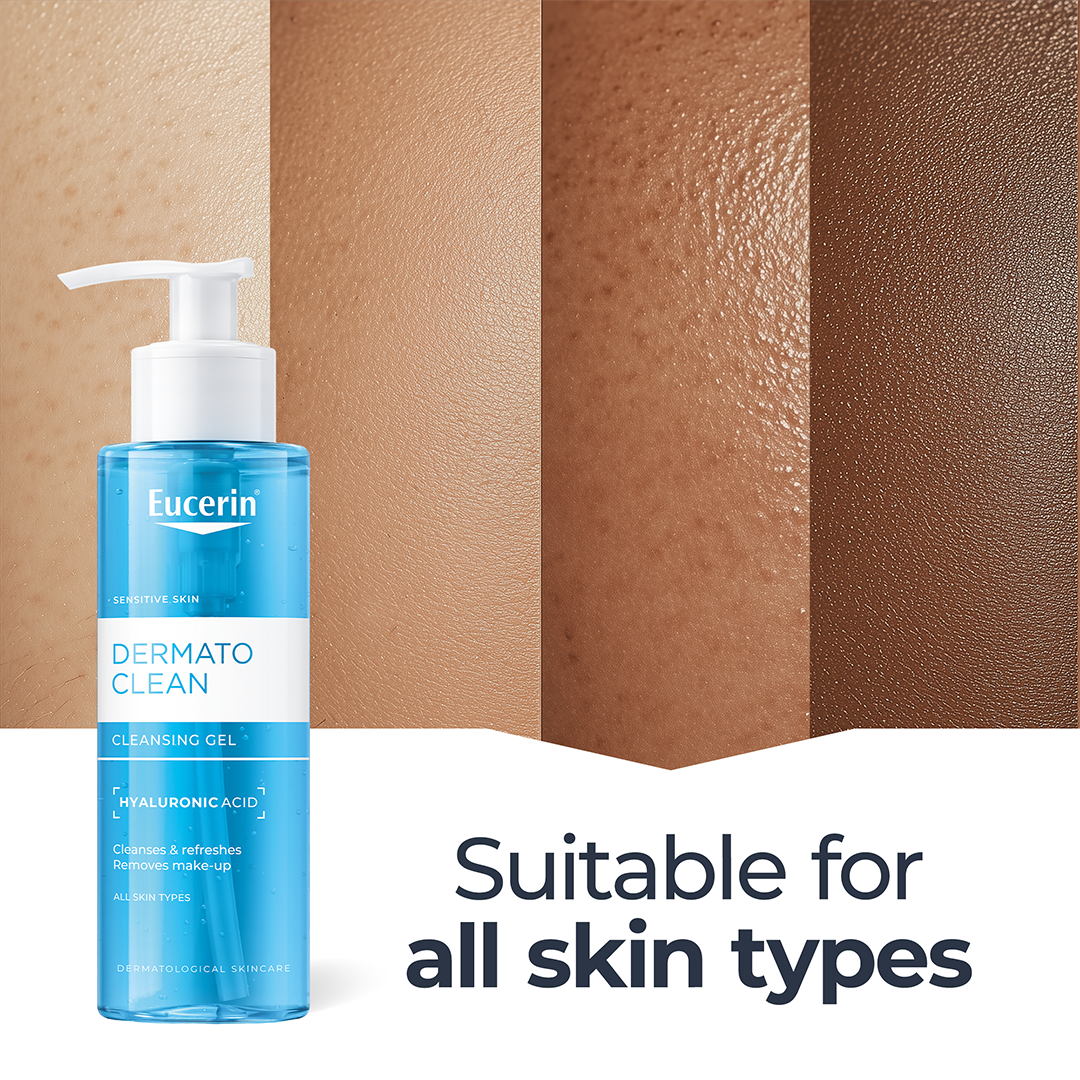
Infographic showing how Eucerin DermatoCLEAN Cleansing Gel is gentle enough to be used on all skin types
Eucerin DermatoCLEAN Cleansing Gel is gentle enough to be used on all skin types

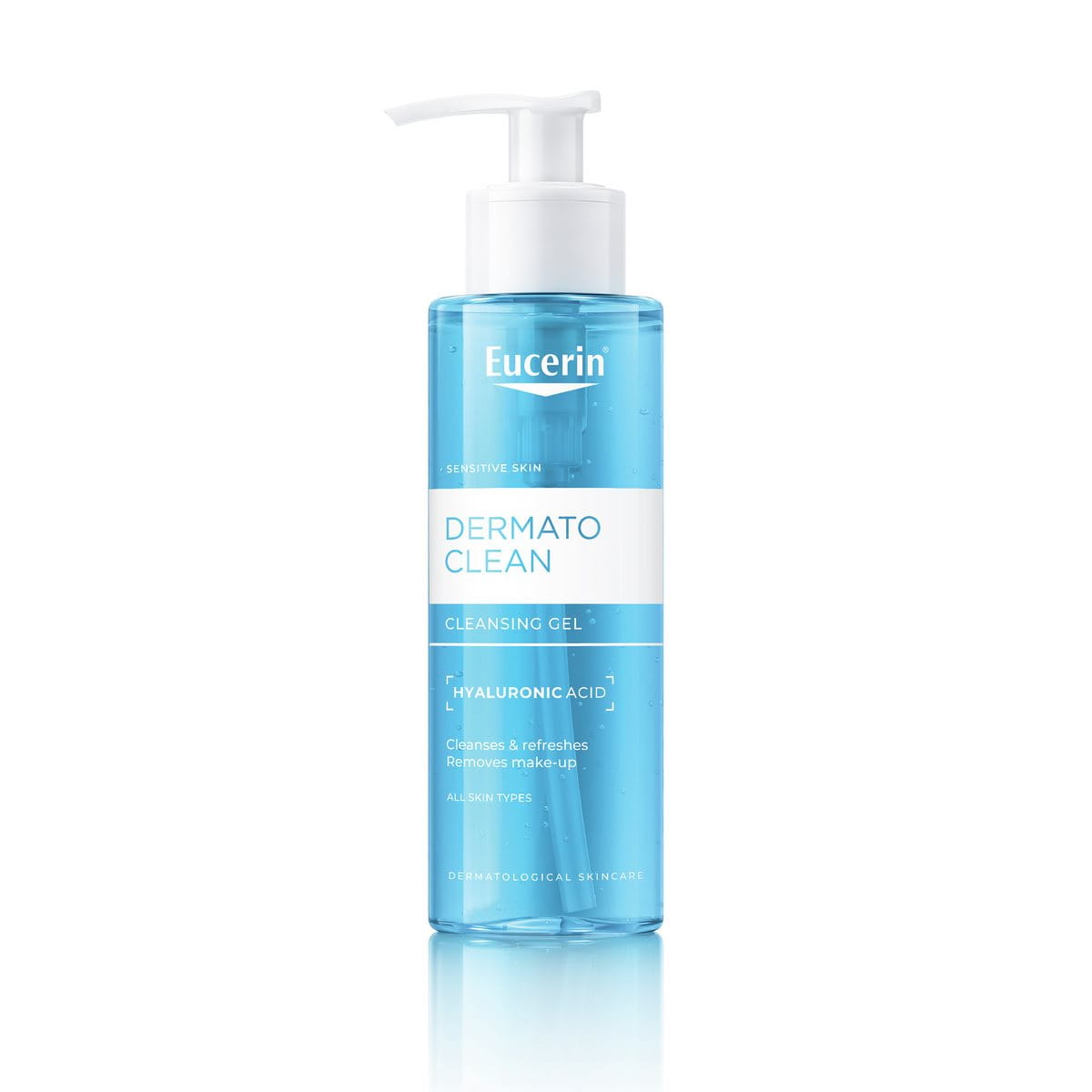
Eucerin DermatoCLEAN Cleansing Gel is a mild daily cleanser enriched with Hyaluronic Acid and Gluco-Glycerol that gently yet effectively removes impurities, excess sebum, and makeup. Its fragrance-free formula helps support the skin’s natural barrier and maintain the skin’s pH, making it suitable for daily use on all skin types, including sensitive skin.

Cleanser for oily and blemish-prone skin

Oily and blemish-prone skin benefits from consistent cleansing that helps reduce excess sebum, unclog pores, and minimise buildup without disrupting the skin barrier. Choosing the right cleanser depends on whether the priority is daily oil control, blemish correction, or post-blemish marks.

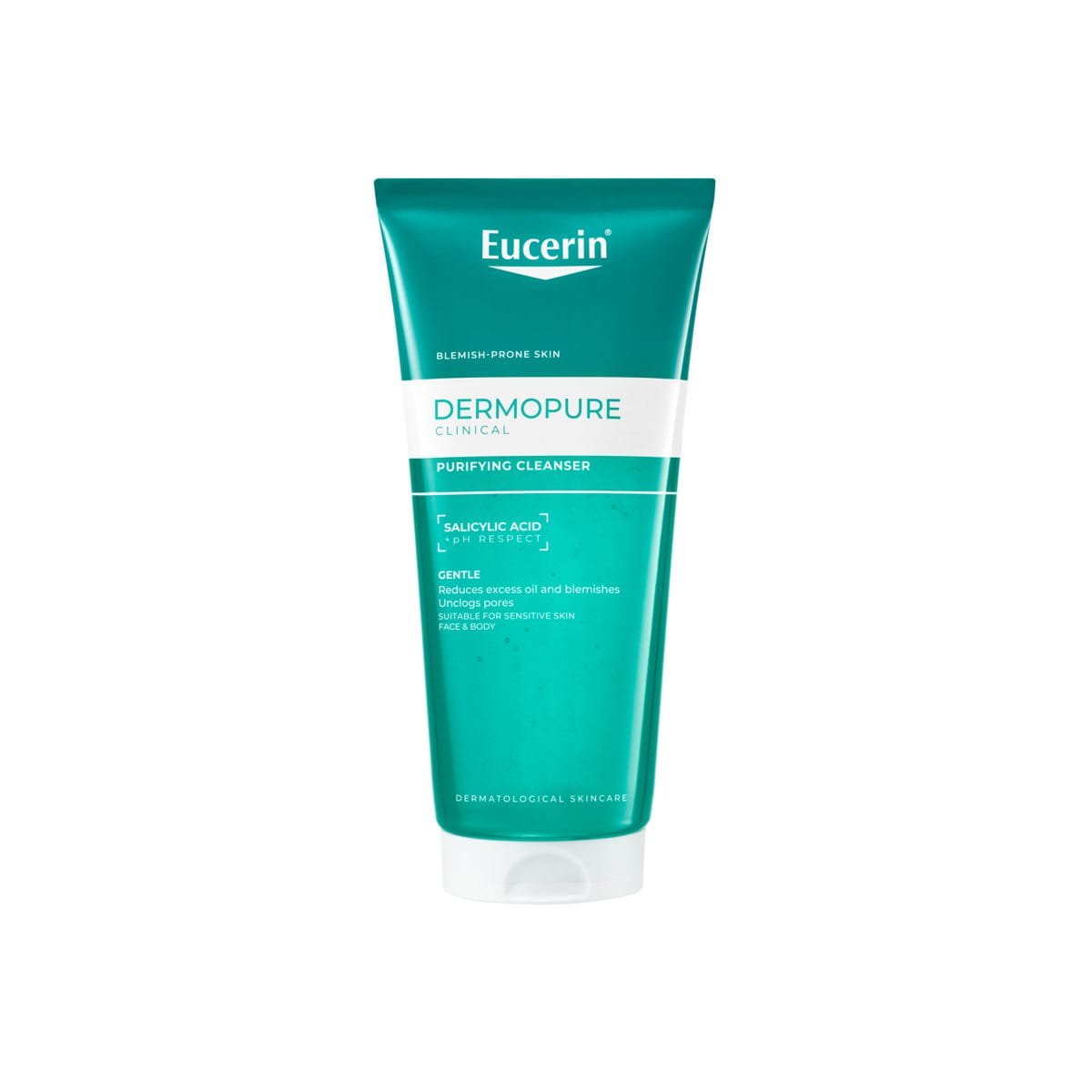
  • Eucerin Dermopure Clinical Purifying Cleanser is a gentle daily cleanser formulated with Salicylic Acid (BHA), AHA, and PHA to help reduce excess oil, unclog pores and refine skin texture. Its minimal fragrance-free and soap-free formula helps purify blemish-prone skin without drying it out.
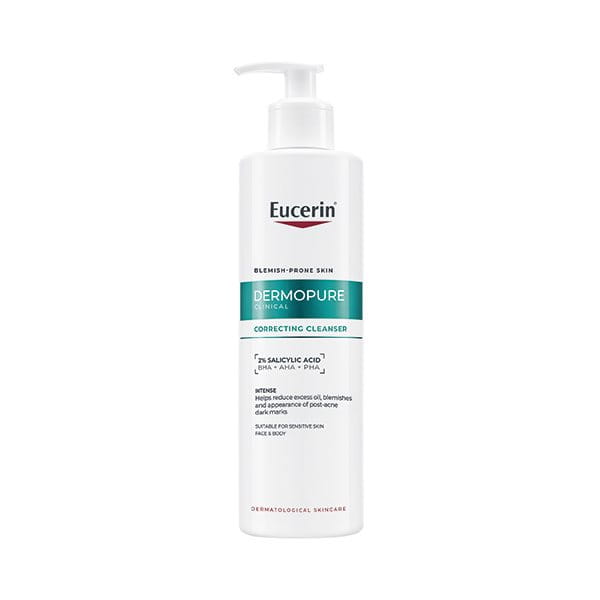
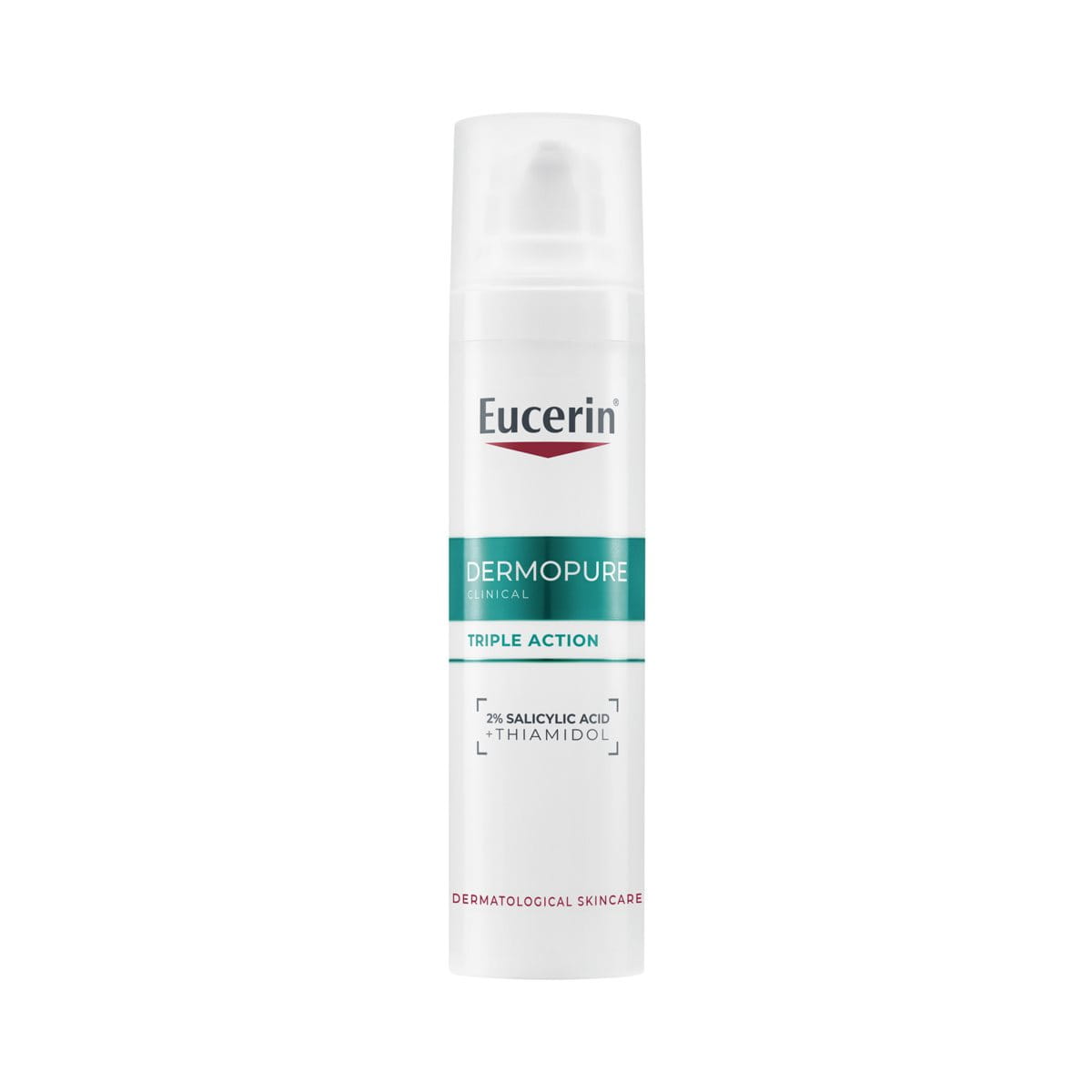
  • Eucerin Dermopure Clinical Correcting Cleanser contains 2% Salicylic Acid alongside AHA and PHA to help reduce excess sebum, correct blemishes, and help improve the appearance of post-blemish marks. The serum-concentration formula is non-comedogenic, oil-free, and suitable for oily and blemish-prone skin.

Cleanser for uneven skin tone and pigmentation concerns

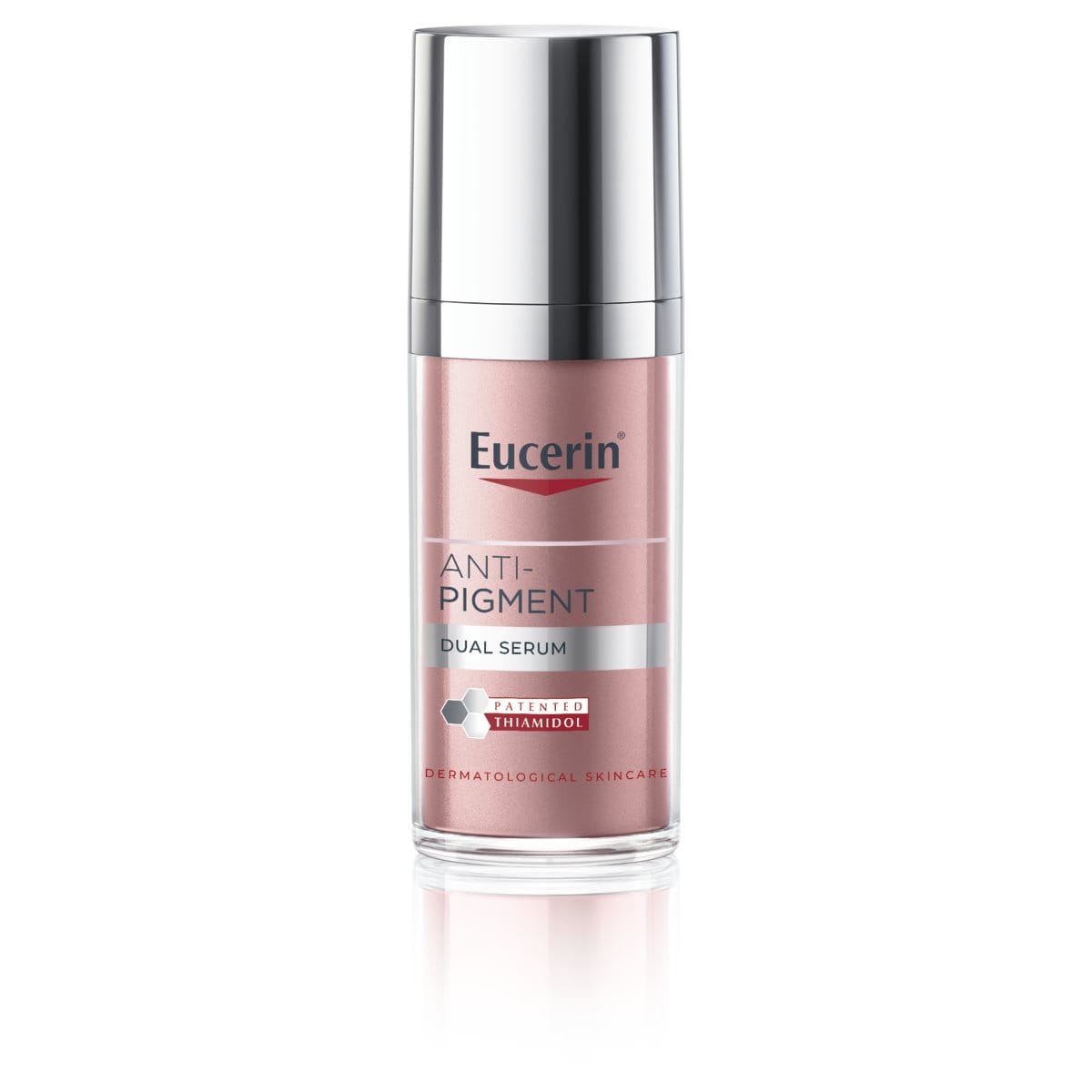
Image showing how 98% of volunteers in a product-in-use test confirm a success in spot reduction when using Anti-Pigment Cleansing Gel and Dual Serum together after 1 week.
Eucerin Anti-Pigment is clinically proven to visibly reduce the appearance of dark spots

Skin with uneven tone or dark spots benefits from gentle daily cleansing that helps remove impurities while supporting a more even-looking complexion and improved skin clarity.

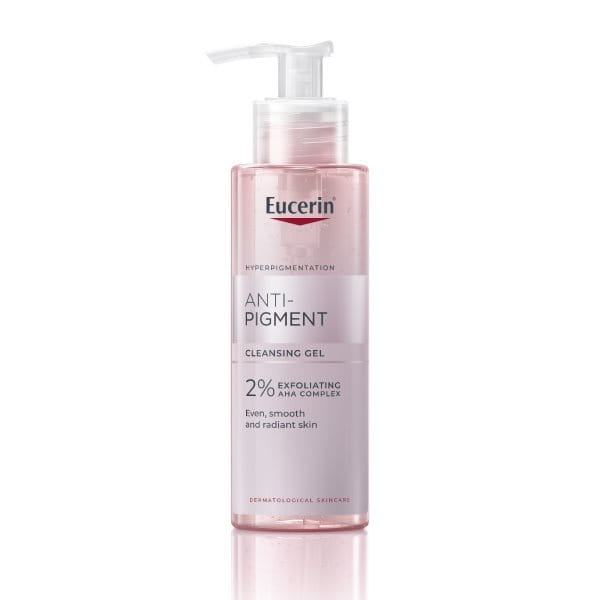
Eucerin Anti-Pigment Cleansing Gel is a daily-use cleanser with a 2% AHA Complex that helps improve skin radiance and even out skin tone. It removes dirt, oil, and impurities while maintaining the skin’s natural moisture balance, leaving skin feeling soft and smooth. When used regularly, it supports a brighter, more uniform-looking complexion.

Advanced face cleansing techniques and timing

Beyond a basic face cleansing method, timing, duration, and technique can influence how effectively impurities such as SPF, excess sebum, and pollution are removed from the skin4. Using the correct approach helps ensure effective cleansing without over-stripping the skin’s natural moisture barrier.

What is double cleansing, and when should you use it?

Double cleansing is a two-step face cleansing method designed to help thoroughly remove makeup, SPF, excess sebum, and environmental pollutants from the skin, particularly at the end of the day.

The first step typically uses an oil-based cleanser to help dissolve sunscreen, makeup and oil-based impurities, followed by a water-based cleanser such as a cleansing gel or face wash to help remove remaining buildup and leave the skin feeling clean and balanced4.

Double cleansing is a two-step evening method that helps remove makeup, SPF, and impurities more thoroughly, especially after heavy product use or high environmental exposure.

Double cleansing is most suitable as part of an evening skincare routine, especially for individuals who wear makeup, long-wear SPF, or experience higher levels of daily environmental exposure. It is not always necessary in the morning and should be adapted according to skin type, with simpler cleansing routines often being sufficient for dry or sensitive skin.

How long should you cleanse your face for?

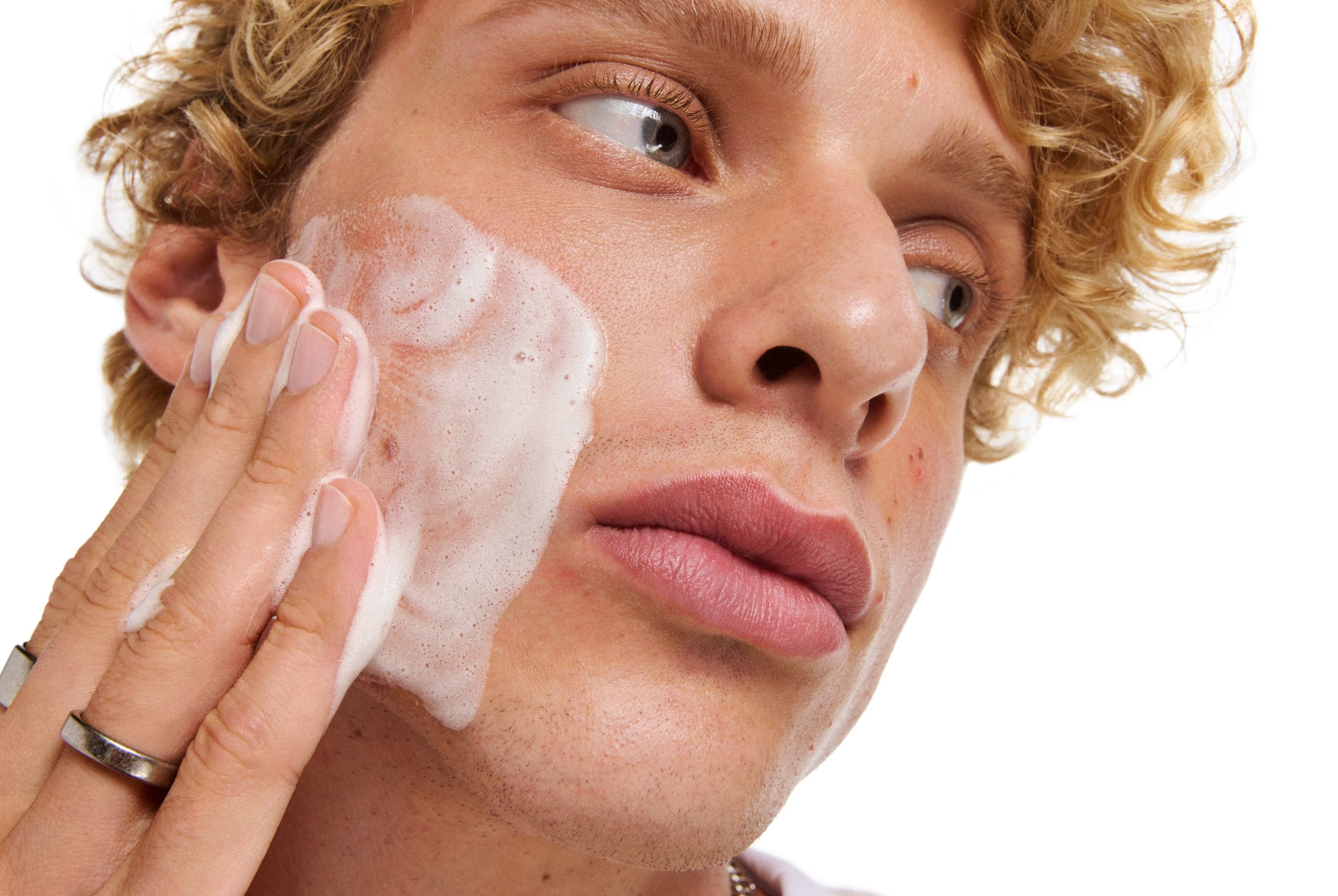
a man washing his face
When cleansing your face be sure to pay attention to how you skin reacts and adjust your routine accordingly.

Most skin types benefit from cleansing for around 20-60 seconds[8], depending on the cleanser type and the level of daily buildup, such as SPF, oil, or makeup. This timeframe helps ensure effective removal of impurities while maintaining a gentle approach to cleansing.

The 60-second cleansing rule refers to gently massaging cleanser into the skin for up to one minute to help support more effective removal of impurities without excessive scrubbing4. Shorter cleansing times may be more suitable for sensitive or dry skin, while slightly longer cleansing may be helpful when removing heavier makeup, SPF, or excess oil.

What is the best tool to wash your face with?

Clean fingertips are generally the most effective tool for facial cleansing7. They allow controlled pressure and even distribution of cleanser across the skin while minimising friction.

Using fingertips also helps reduce the risk of irritation compared to cleansing brushes or abrasive tools, which may disrupt the skin barrier if used too frequently or with excessive pressure.

Common face cleansing mistakes to avoid

Many face cleansing issues are caused by everyday habits rather than product choice alone. Using the correct face cleansing method and avoiding common mistakes helps support the skin’s natural moisture barrier and maintain overall skin balance.

Common face cleansing mistakes include:

  • Using water or temperature incorrectly, such as washing the face with water only or using hot water instead of lukewarm water, may lead to incomplete cleansing or increased dryness and sensitivity.
  • Over-cleansing or incorrect frequency, including washing the face more than twice a day, or only cleansing in the morning or evening, which may disrupt the skin’s natural balance.
  • Using unsuitable products or techniques, such as using harsh soaps instead of a gentle facial cleanser, or using a cleanser that does not match the skin type (dry, oily, combination, or sensitive skin).
  • Inadequate removal or aftercare, such as not fully removing makeup or SPF, skipping moisturiser after cleansing, or rubbing the skin too aggressively, may affect skin comfort and hydration.
  • Incorrect exfoliation habits, such as exfoliating too frequently, which may increase sensitivity and weaken the skin barrier over time7.

Summary: how to wash your face for healthy-looking skin

Face cleansing is most effective when it is consistent, gentle, and tailored to your skin type. When performed correctly, it helps remove daily impurities, while supporting the skin’s natural moisture barrier.

For most skin types, cleansing twice daily is generally appropriate, with adjustments based on individual needs such as dryness, sensitivity, oil production, and environmental exposure. Factors such as water temperature, cleansing duration, and product type can all influence overall skin comfort and cleansing experience. Eucerin offers dermatologically developed cleansers designed for different skin types to support a consistent daily cleansing routine.

Face cleansing FAQs (6)

  • What is the correct order to cleanse your face?

    The correct skincare order is to cleanse first, followed by treatments such as serums, then moisturiser, and SPF in the morning. Cleansing always comes first to help ensure the skin is free from impurities before applying skincare products.

  • How often should you cleanse your face?

    Most skin types benefit from cleansing twice a day, in the morning and evening. This helps maintain skin balance and removes daily buildup without over-cleansing.

  • Should I cleanse my face in the morning?

    Yes, morning cleansing helps remove overnight oil and sweat while preparing the skin for skincare and SPF application.

  • What is the difference between cleansing and using a face wash?

    Cleansing refers to the overall process of removing dirt, oil, and impurities from the skin. A face wash is one type of cleanser, typically water-based and may foam or lather depending on formulation.

  • What is the double cleansing face method?

    Double cleansing is a two-step evening routine that uses an oil-based cleanser first to remove makeup and SPF, followed by a water-based cleanser to deeply cleanse the skin.

  • What is the 60-second rule in skincare?

    The 60-second rule suggests cleansing the skin for up to one minute to help ensure effective removal of impurities such as oil, SPF, and pollution without over-scrubbing.

Related Articles

Citations

  1. Oakley, A. Soaps and cleansers | DermNet NZ. dermnetnz.org. https://dermnetnz.org/topics/soaps-and-cleansers
  2. Yung, A. Structure of normal skin. dermnetnz.org. https://dermnetnz.org/topics/the-structure-of-normal-skin
  3. Hoover, E.; Krishnamurthy, K. Physiology, Sebaceous Glands. PubMed. https://www.ncbi.nlm.nih.gov/books/NBK499819/
  4. Mukhopadhyay, P. Cleansers and Their Role in Various Dermatological Disorders. Indian Journal of Dermatology 2011, 56 (1), 2. https://doi.org/10.4103/0019-5154.77542
  5. Oakley, A. Acne vulgaris | DermNet NZ. dermnetnz.org. https://dermnetnz.org/topics/acne-vulgaris
  6. Rosso, J. D.; Zeichner, J.; Alexis, A.; Cohen, D.; Berson, D. Understanding the Epidermal Barrier in Healthy and Compromised Skin: Clinically Relevant Information for the Dermatology Practitioner: Proceedings of an Expert Panel Roundtable Meeting. The Journal of Clinical and Aesthetic Dermatology 2016, 9 (4 Suppl 1), S2 https://pmc.ncbi.nlm.nih.gov/articles/PMC5608132/
  7. Face washing 101. www.aad.org. https://www.aad.org/public/everyday-care/skin-care-basics/care/face-washing-101
  8. Purnamawati, S.; Indrastuti, N.; Danarti, R.; Saefudin, T. The Role of Moisturizers in Addressing Various Kinds of Dermatitis: A Review. Clinical Medicine & Research 2017, 15 (3-4), 75–87. https://doi.org/10.3121/cmr.2017.1363

Find your nearest Eucerin pharmacy