

Portrait of a smiling woman with shoulder-length blonde hair wearing a white V-neck blazer against a light gray background.

Collagen for Skin: How to Support Firmness and Elasticity

Show more

Last Reviewed: March, 2026

Collagen is a key structural protein in the skin, helping it stay firm, smooth, and elastic. Naturally produced by the body, it provides strength and support, keeping skin resilient and healthy. As we age, Collagen levels gradually decline, which can lead to fine lines, sagging, and a loss of radiance.1

Understanding how Collagen functions and the steps you can take to support its levels is essential for maintaining healthy-looking skin.2 In this guide, we explore what Collagen does for the skin, the signs of reduced Collagen, the different types of Collagen, and how diet, lifestyle, and targeted skincare can help stimulate and support the skin’s natural Collagen production.
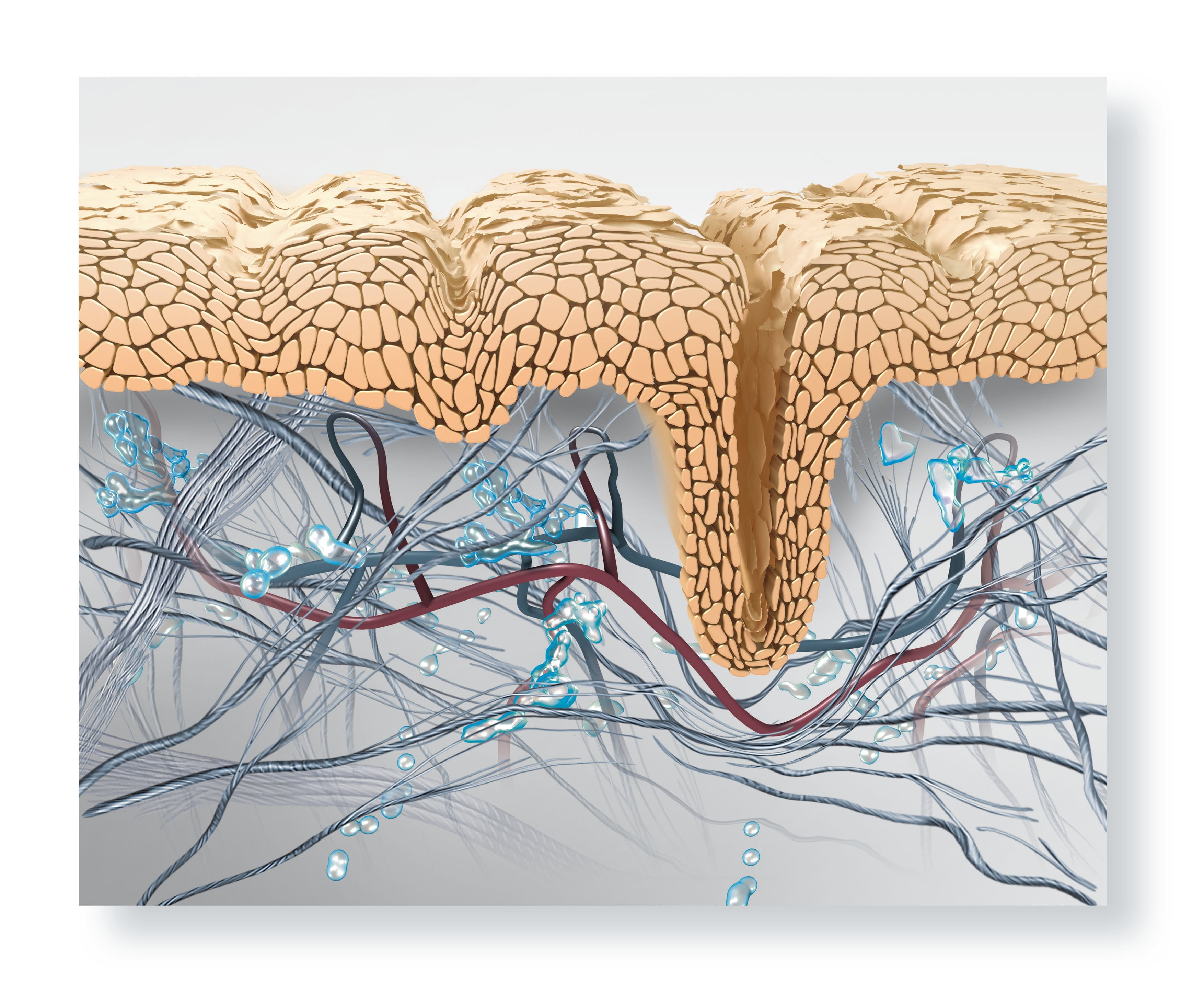
What is Collagen, and what does it do?

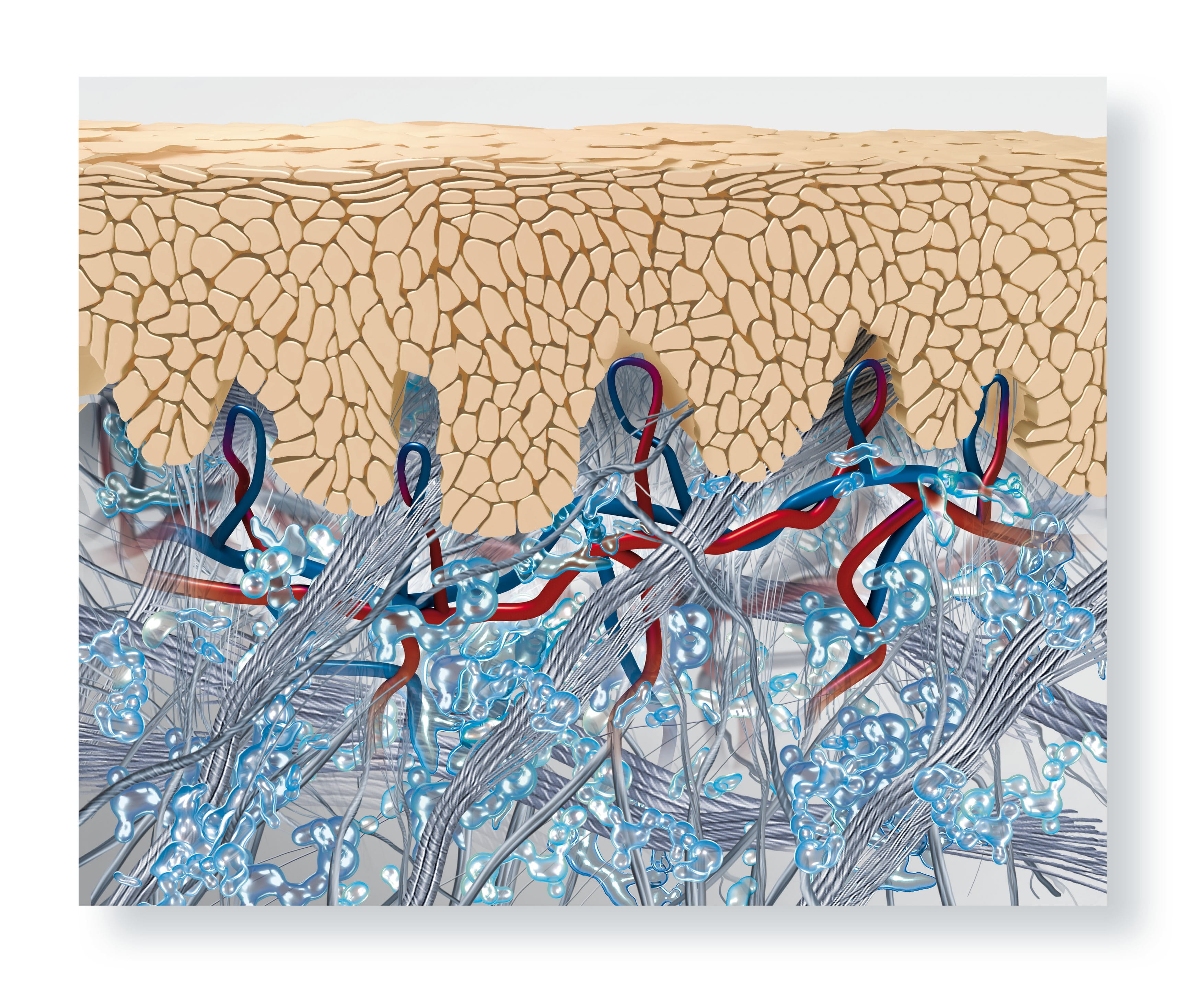
Diagram showing increased levels of collagen under younger skin
Youthful skin looks firm, radiant, and smooth, without lines or wrinkles.

Collagen forms a strong network of fibres in the dermis, the middle layer of the skin. This network acts as a supportive framework that keeps skin firm, smooth, and resilient.3

When Collagen levels are high, the skin appears plumper and more elastic. As Collagen levels decrease, the structural support within the skin weakens, which can contribute to visible changes such as fine lines and reduced firmness.3

Diagram showing low levels of collagen under mature skin
Mature skin often loses elasticity, radiance, and resilience, making wrinkles more visible.

Main Collagen benefits for skin:

Maintains structure and firmness: Collagen fibres create a scaffold that helps skin stay smooth and lifted.4

Supports elasticity: Working together with Elastin fibres, Collagen helps skin return to its shape after stretching or movement.

Helps maintain hydration: Collagen supports the dermal matrix, which helps retain moisture in the skin.

Supports skin repair: Collagen is involved in the natural renewal and repair processes that maintain a healthy skin barrier.4

Collagen acts as the structural framework of the skin, helping maintain firmness, elasticity, and resilience.

What are the different types of Collagen?

Scientists have identified more than twenty different types of Collagen in the body. Each type has a slightly different structure and function, supporting different tissues including skin, cartilage, and connective tissue.5

High levels of Collagen help keep the skin firm and elastic by maintaining the strength and organisation of the dermal matrix.5

Type I Collagen

Type I Collagen is the most abundant Collagen in the body, making up around 90 percent of total Collagen. It is primarily found in the skin, bones, tendons, ligaments, and connective tissues.7

Type II Collagen

Type II Collagen is mainly found in cartilage, the flexible tissue that cushions joints. Its primary function is to support joint flexibility and resilience.7

Although it is less prominent in the skin, it remains an important structural protein in the body.7

Type III Collagen

Type III Collagen is found in the skin, blood vessels, and internal organs. In the skin, it works alongside type I Collagen to support elasticity and structural integrity.7

Type IV Collagen

Type IV Collagen is a key component of the basement membrane, the thin layer that connects the epidermis to the dermis. It helps maintain the stability and function of epithelial tissues.7

Type V Collagen

Type V Collagen helps regulate the formation and organisation of Collagen fibres. It is present in certain layers of the skin, hair follicles, and the cornea of the eye.7

Understanding these Collagen types highlights the complex role Collagen plays in maintaining the strength and structure of skin and connective tissues.7

Why does collagen decrease with age?

Collagen production naturally declines as part of the ageing process, with less new Collagen being produced and existing fibres gradually breaking down.6 Research shows Collagen production decreases by approximately one percent with each year of age after 21 years of age*. Several factors influence this decline:

  • Hormonal changes: Women may lose up to 30 percent of Collagen during the first five years of menopause**, affecting skin firmness and elasticity.
  • Environmental factors: Exposure to UV radiation, pollution, and smoking accelerates Collagen breakdown.1
  • Lifestyle factors: Poor nutrition and chronic stress can further reduce Collagen production and impair skin structure.
  • Sun exposure: UV damage specifically damages Collagen fibres, leading to sagging, wrinkles, and loss of skin density.1

*Data of 600 male and female subjects from our skin research centre, aged 15–79 (divided into seven age groups per decade). Comparison with an anamnesis questionnaire in the context of a dermatologist graduate thesis paper.

**Journal of Clinical Endocrinology & Metabolism - The Impact of Estrogen.

What are the signs of collagen loss?

As Collagen levels decline, the skin may gradually show visible changes in texture and firmness.1

Common signs of low collagen include:

  • Fine lines and wrinkles: Reduced Collagen weakens the skin’s structural support.
  • Loss of firmness: Skin may appear less taut, particularly around the cheeks and jawline.
  • Thinner skin texture: The dermis may lose density as Collagen fibres decrease.1
Collagen production gradually decreases with age, which can contribute to reduced firmness, elasticity, and skin density.

How to stimulate collagen production in skin

Supporting Collagen production involves more than skincare alone. Nutrition and lifestyle habits provide the building blocks needed for collagen synthesis and help protect Collagen from damage.8

Certain nutrients play an important role in collagen formation:

Eating the right nutrients gives your body the building blocks it needs to product and maintain Collagen. Incorporating these key foods can support skin strength, elasticity, and overall health:

  • Protein-rich foods: Fish, eggs, poultry, and legumes provide amino acids that form Collagen fibres.9
  • Vitamin C: Citrus fruits, berries, and peppers help support the enzymatic processes required for collagen production.
  • Zinc and copper: These minerals contribute to connective tissue health and Collagen formation.
  • Antioxidants: Fruits and vegetables help protect Collagen from oxidative stress.9

Lifestyle habits can also influence collagen levels:

Daily lifestyle choices can either protect or accelerate the breakdown of Collagen in your skin. Habits such as sun protection, adequate sleep, and stress management help maintain collagen and support healthy, resilient skin:

  • Sun protection: UV exposure can accelerate Collagen breakdown.
  • Adequate sleep: Skin repair and regeneration occur primarily during sleep.
  • Stress management: Chronic stress may negatively affect skin renewal processes.10
A balanced diet and protective lifestyle habits help create the conditions needed for healthy Collagen production.

Skincare to support collagen production

Targeted skincare, alongside a balanced diet and healthy lifestyle, helps maintain existing collagen and encourages the skin’s natural ability to produce new Collagen. While nutrition and lifestyle provide the building blocks, topical products act directly on the collagen fibres in the skin.11

Advanced formulations often include ingredients such as Collagen-Elastin complexes, which support both Collagen and Elastin, helping to improve firmness and elasticity.

Key actives like Hyaluronic Acid, Peptides, and plant-derived ingredients stimulate Collagen synthesis and strengthen the skin’s structure. With consistent use, these products can plump deep wrinkles, enhance elasticity, and leave skin looking smoother and more resilient.11

Combining targeted skincare with healthy habits provides the best conditions for resilient, youthful-looking skin.

Dermatologist-recommended skincare routine to support collagen

Maintaining healthy Collagen levels requires a consistent skincare routine that protects existing collagen and encourages the skin’s natural production of new Collagen.11

Dermatologists often recommend a routine that combines gentle cleansing, targeted treatments, and a day cream that supports firmness and elasticity.11

Step 1: Cleanse gently

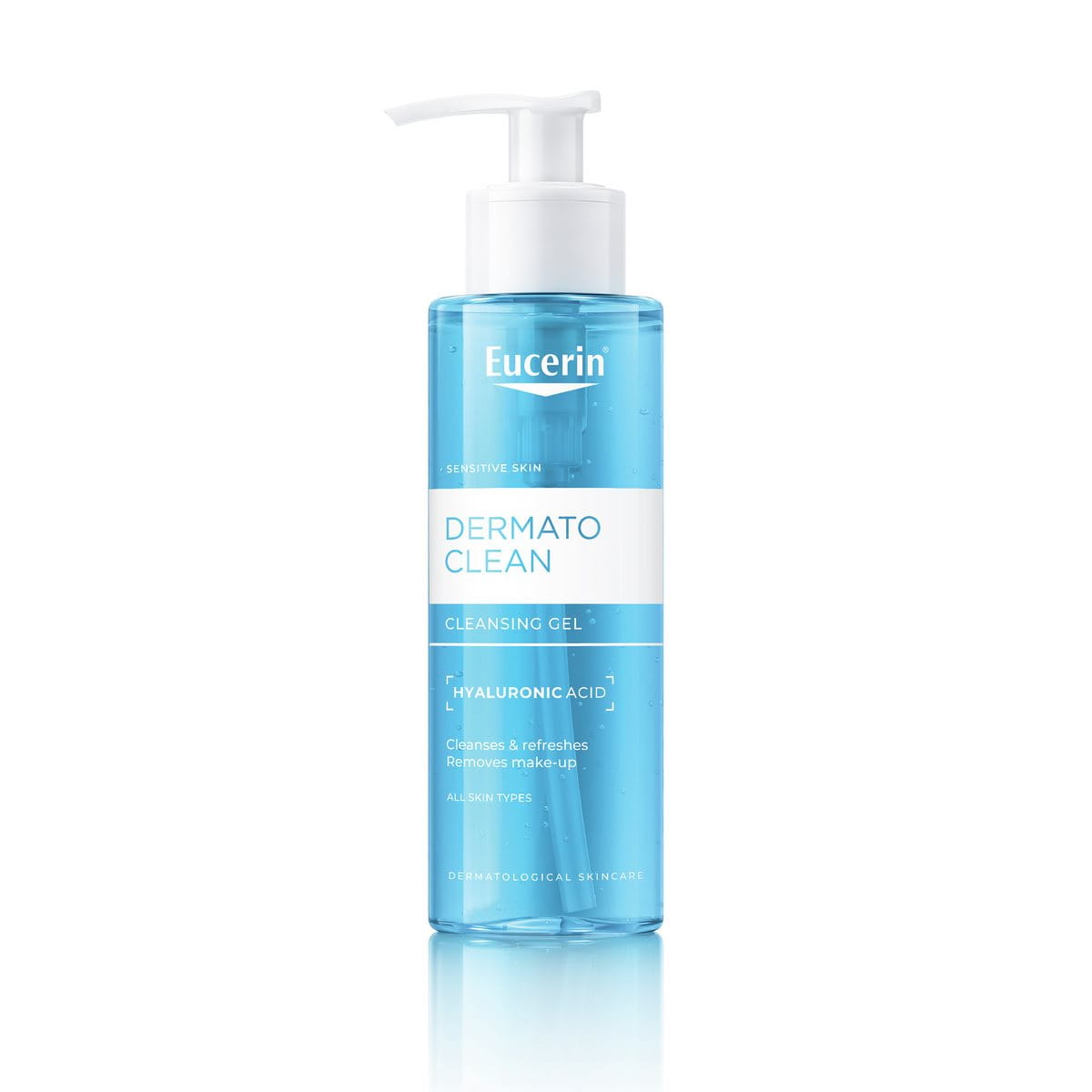
Start your routine with a gentle cleanser to remove impurities, excess oil, and makeup without disrupting the skin’s natural barrier. Using a product like Eucerin DermatoClean Cleansing Gel, which is enriched with Hyaluronic Acid and Gluco-Glycerol, helps cleanse thoroughly while maintaining skin hydration and comfort. This prepares your skin to absorb active ingredients more effectively.

Step 2: Targeted serum to support collagen production at a cellular level

To maintain skin firmness and elasticity, it’s important to stimulate the skin’s natural Collagen production. A targeted serum works directly on the deeper layers of the skin where Collagen renewal occurs, helping to strengthen the dermal structure and reduce the appearance of age-related changes. 
Apply Eucerin Hyaluron-Filler + Elasticity 3D Serum, a clinically and dermatologically tested anti-ageing serum for mature skin. This serum:

  • Reduces age spots with Thiamidol, helping prevent their reappearance.
  • Visibly plumps deep wrinkles with a combination of high and low molecular Hyaluronic Acid, supporting the skin’s structural matrix.
  • Improves skin elasticity with Hyaluronic Acid, which helps hydrate skin.

Step 3: Hydrating day cream with SPF to protect and support collagen throughout the day

Daily hydration and sun protection are essential to preserve existing Collagen and prevent UV-induced Collagen breakdown. A nourishing day cream strengthens the skin barrier, supports elasticity, and ensures that Collagen is maintained while protecting against environmental stressors.

Choose a day cream that suits your needs:

Option 1:  Eucerin Hyaluron-Filler + Elasticity Day SPF 30 - a rich day cream that reduces deep wrinkles, improves elasticity, and corrects age spots.

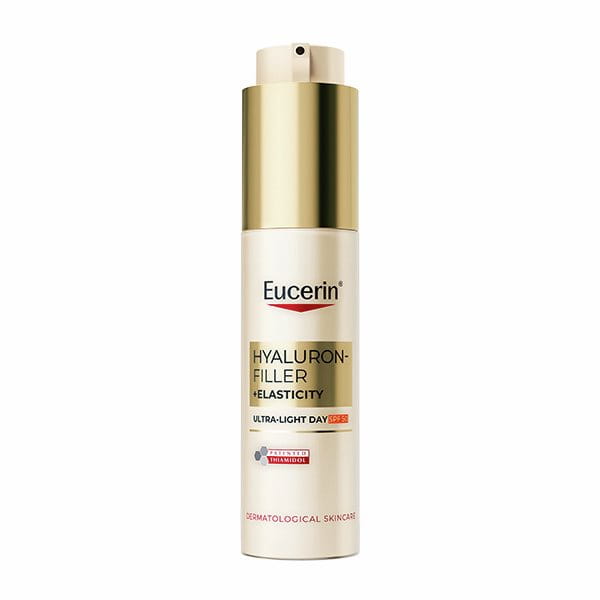
Option 2: Eucerin Hyaluron-Filler + Elasticity Ultra Light Day SPF50 - an ultra-light fluid with imperceptible high SPF that reduces and prevents age spots, boosts Collagen production, and visibly improves skin firmness and elasticity.

Following this routine daily allows the serum and day cream to work effectively over time, helping your skin maintain a smoother, firmer, and more radiant appearance.

Related Products

A consistent routine with targeted serum and hydrating day cream with SPF helps protect and support Collagen for visibly younger-looking skin.

Additional support with Eucerin Hyaluron-Filler Epigenetic Serum

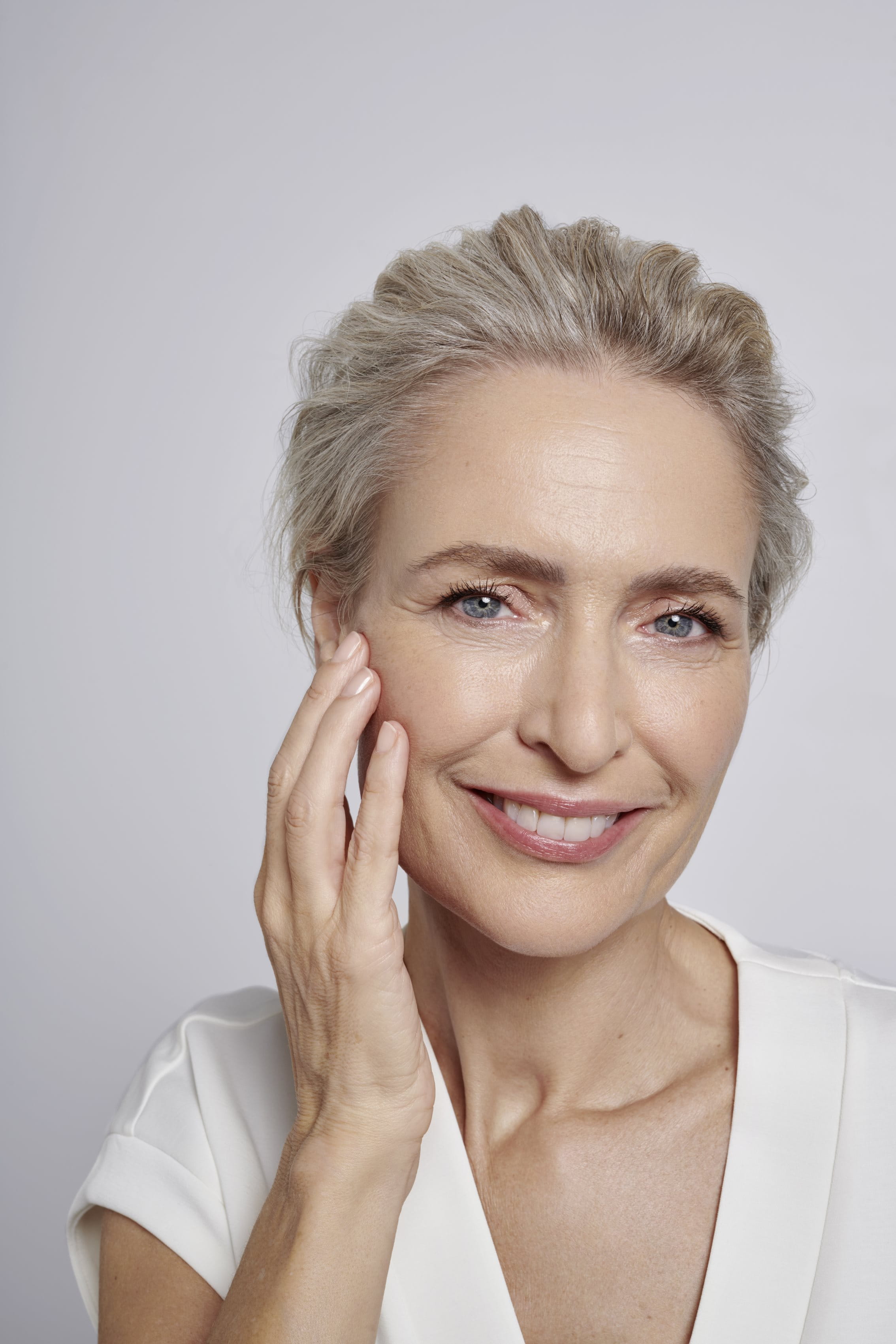
Older woman smiling while touching her face on a grey background
High levels of Collagen can help keep your skin firm and elastic.

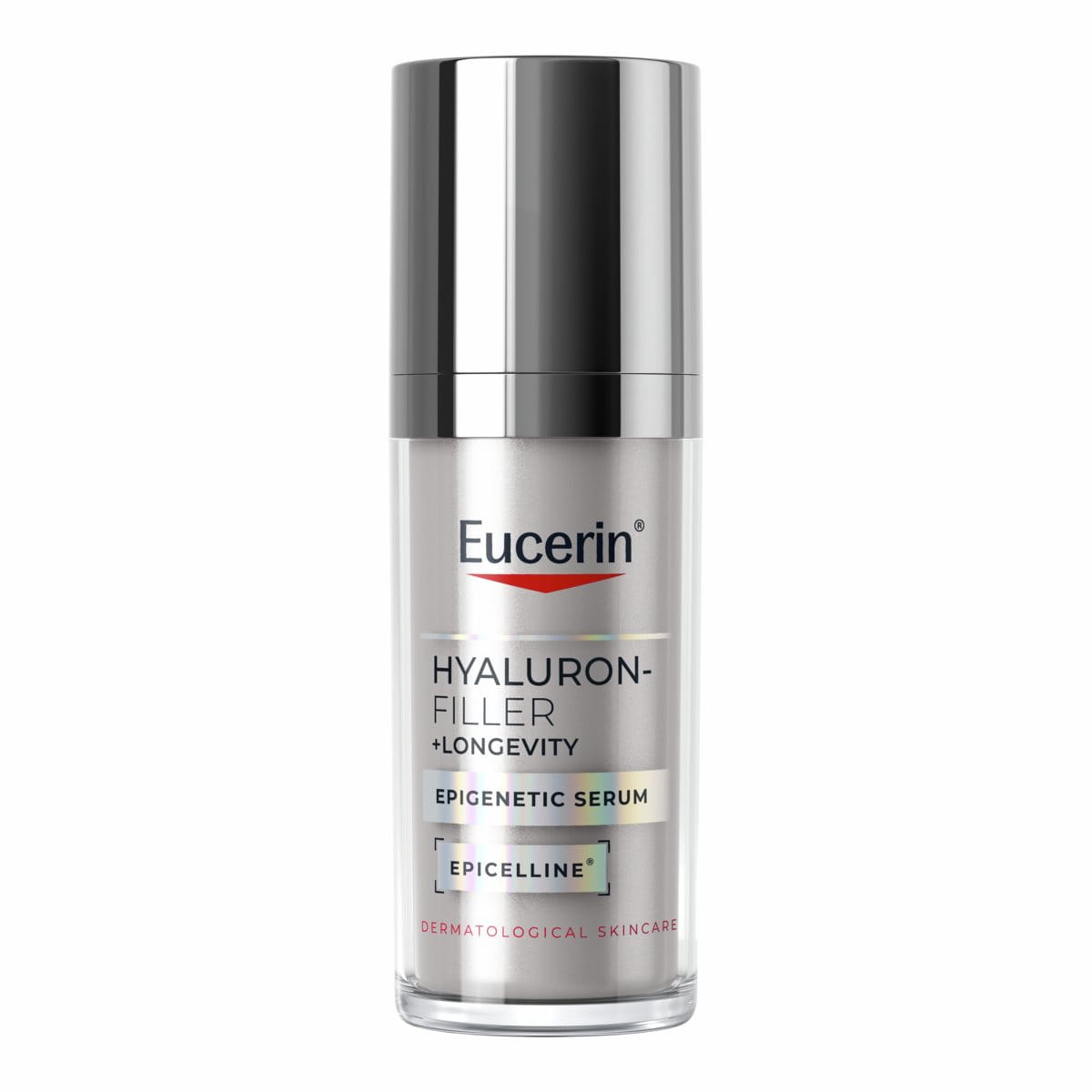
For those looking for extra support or a more gradual approach, Hyaluron-Filler + Longevity Epigenetic Serum is a dermatologist-tested serum that helps maintain the skin’s hydration and natural Collagen production. This serum:

  • Supports Collagen synthesis and skin elasticity.
  • Reverses 10 visible signs of ageing, including reducing the appearance of fine lines and deeper wrinkles over time.
  • Strengthens the skin’s structure with a light, fast-absorbing formula suitable for all skin types.

Using this serum alongside a gentle cleanser and your day cream allows you to integrate an additional targeted treatment into your daily routine without overcomplicating steps.

Effectiveness of Collagen-Elastin Complex for mature skin

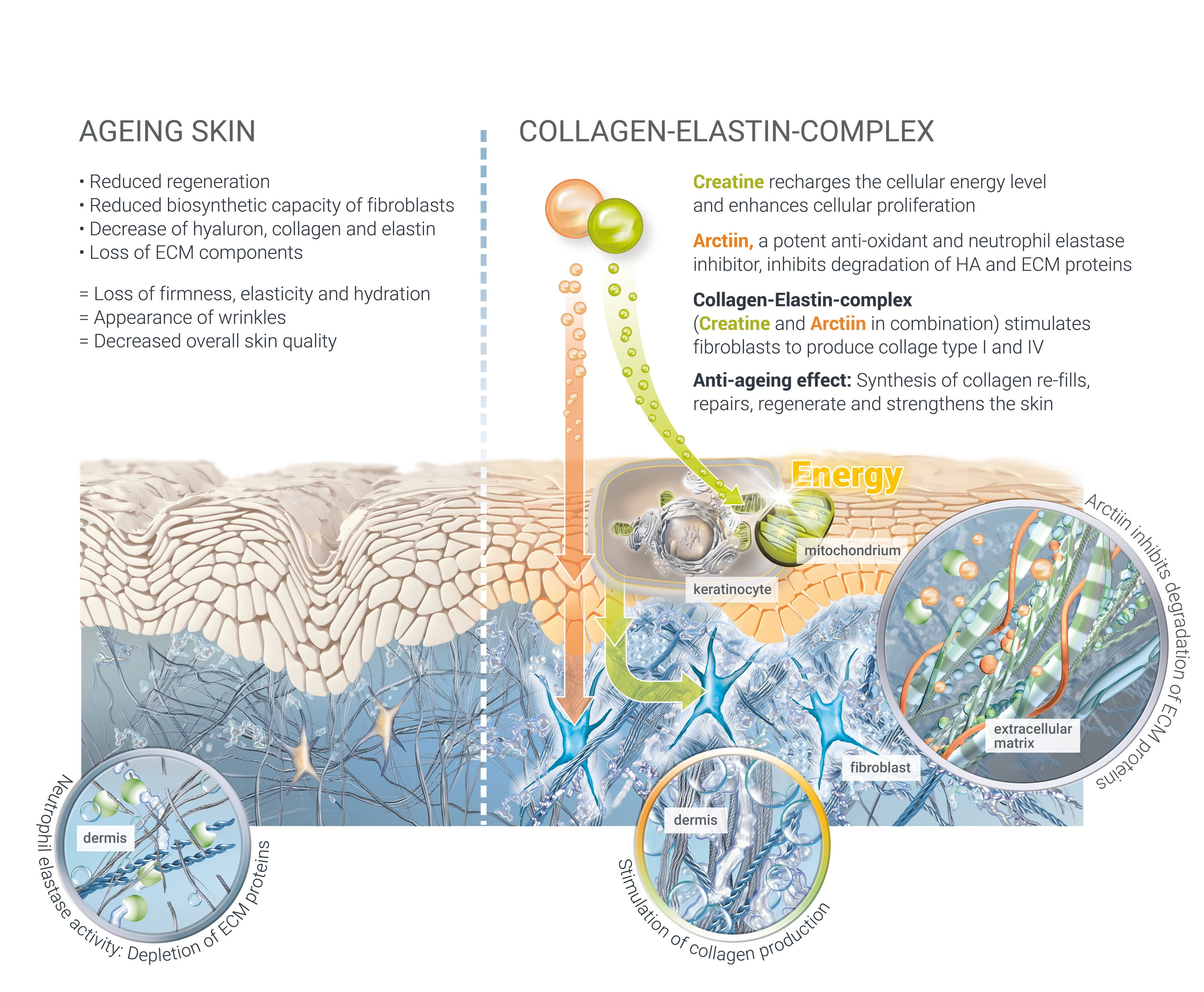
Diagram showing the effects of Collagen-Elastin Complex in supporting ageing skin

The Collagen-Elastin Complex, featured in Eucerin’s Hyaluron-Filler + Elasticity  range, is a targeted ingredient designed to support skin firmness and elasticity.

This advanced complex works on multiple levels:

  • Supports Collagen and Elastin fibres - It reinforces the skin’s structural framework, helping to improve firmness and reduce the appearance of deep wrinkles.
  • Enhances elasticity - By supporting both Collagen and Elastin, the skin can better resist sagging and maintain a more lifted, youthful appearance.
  • Boosts hydration and plumpness - It works synergistically with other actives, such as Hyaluronic Acid, to enhance moisture retention and skin density.

Compared with traditional anti-ageing ingredients like Hyaluronic Acid alone, the Collagen-Elastin Complex specifically targets the proteins responsible for the skin’s structural integrity, making it especially beneficial for mature skin. While Hyaluronic Acid hydrates and plumps, the Collagen-Elastin Complex strengthens and supports the skin’s foundational network of fibres.

The Collagen-Elastin Complex actively reinforces the skin’s structure, helping mature skin stay firmer, smoother, and more resilient.

Key takeaways: how to support collagen and maintain firmer, smoother skin

Collagen is a vital structural protein that helps maintain skin firmness, elasticity, and resilience. Over time, Collagen production naturally decreases, with research showing a decline of approximately one percent per year after the age of 21, and significant reductions during menopause.

Supporting Collagen involves a combination of targeted skincare, nutrition, and healthy lifestyle habits. Using skincare formulated to help stimulate Collagen production, alongside a balanced diet, sun protection, and other protective habits, can help maintain smoother, firmer, and more resilient-looking skin over time.

FAQs about Collagen (8)

  • What is Collagen good for?

    Collagen is a key structural protein in the skin that helps maintain firmness, smoothness, and elasticity. It also supports the skin’s natural repair processes and overall resilience.

  • What does Collagen do for the skin?

    Collagen provides structural support, helping the skin stay plump, elastic, and smooth while maintaining its overall strength.

  • At what age does Collagen production decrease?

    Collagen production naturally declines by approximately one percent per year after the age of 21. Hormonal changes, such as menopause, and environmental factors can accelerate this process.

  • How to increase Collagen in skin?

    Collagen levels can be supported through a combination of targeted skincare, a nutrient-rich diet, and healthy lifestyle habits. Topical products formulated to stimulate Collagen synthesis, along with adequate protein, vitamin C, and minerals, help maintain firmer, more resilient skin.

  • Can skincare help boost Collagen?

    Certain skincare products work directly in the skin to support natural Collagen production and protect existing Collagen from environmental damage.

  • What foods support Collagen production?

    Protein-rich foods, vitamin C sources, and minerals such as zinc and copper provide the building blocks for collagen synthesis and support healthy skin structure.

  • Are Collagen supplements effective for skin?

    Collagen supplements supply amino acids that may support collagen production throughout the body. Results can vary depending on diet, lifestyle, and individual absorption.13

  • What’s the difference between topical skincare and Collagen supplements?

    Topical skincare acts directly on the skin to stimulate Collagen production where it is needed, while Collagen supplements provide amino acids that support Collagen synthesis systemically. Using both approaches together can help maintain firmer, more resilient skin.12

Related Articles

Citations

  1. Bar, O.; Valiukevičienė, S. Skin Aging and Type I Collagen: A Systematic Review of Interventions with Potential Collagen-Related Effects. Cosmetics 2025, 12 (4), 129. https://doi.org/10.3390/cosmetics12040129.
  2. Cleveland Clinic. Collagen: What It is, Types, Function & Benefits. Cleveland Clinic. https://my.clevelandclinic.org/health/articles/23089-collagen.
  3. Shin, J.-W.; Kwon, S.-H.; Choi, J.-Y.; Na, J.-I.; Huh, C.-H.; Choi, H.-R.; Park, K.-C. Molecular Mechanisms of Dermal Aging and Antiaging Approaches. International Journal of Molecular Sciences 2019, 20 (9). https://doi.org/10.3390/ijms20092126.
  4. Pu, S.-Y.; Huang, Y.-L.; Pu, C.-M.; Kang, Y.-N.; Hoang, K. D.; Chen, K.-H.; Chen, C. Effects of Oral Collagen for Skin Anti-Aging: A Systematic Review and Meta-Analysis. Nutrients 2023, 15 (9), 2080. https://doi.org/10.3390/nu15092080.
  5. Shenoy, M.; Abdul, N. S.; Qamar, Z.; Bahri, B. M. Al; Al Ghalayini, K. Z. K.; Kakti, A. Collagen Structure, Synthesis, and Its Applications: A Systematic Review. Cureus 2022, 14 (5). https://doi.org/10.7759/cureus.24856.
  6. Lee, H.; Hong, Y.; Kim, M. Structural and Functional Changes and Possible Molecular Mechanisms in Aged Skin. International Journal of Molecular Sciences 2021, 22 (22), 12489. https://doi.org/10.3390/ijms222212489.
  7. Shahrajabian, M. H.; Sun, W. Mechanism of Action of Collagen and Epidermal Growth Factor: A Review on Theory and Research Methods. Mini-Reviews in Medicinal Chemistry 2024, 24 (4), 453–477. https://doi.org/10.2174/1389557523666230816090054.
  8. Lee, C.; Fernandes, M. A. Emotional Encoding Context Leads to Memory Bias in Individuals with High Anxiety. Brain Sciences 2018, 8 (1), 6. https://doi.org/10.3390/brainsci8010006.
  9. Denney, L.; Afeiche, M. C.; Eldridge, A. L.; Villalpando-Carrión, S. Food Sources of Energy and Nutrients in Infants, Toddlers, and Young Children from the Mexican National Health and Nutrition Survey 2012. Nutrients 2017, 9 (5), 494. https://doi.org/10.3390/nu9050494.
  10. Phillips, T. J.; Gottlieb, A. B.; Leyden, J. J.; Lowe, N. J.; Lew-Kaya, D. A.; Sefton, J.; Walker, P. S.; Gibson, J. R.; Tazarotene Cream Photodamage Clinical Study Group. Efficacy of 0.1% Tazarotene Cream for the Treatment of Photodamage: A 12-month Multicenter, Randomized Trial. Archives of dermatology 2002, 138 (11), 1486–1493. https://doi.org/10.1001/archderm.138.11.1486.
  11. Saeki, N.; Silva, M. N.; Kubota, M.; Takanashi, J.; Sugita, K.; Nakazaki, S.; Yamaura, A. Comparative Performance of Magnetic Resonance Angiography and Conventional Angiography in Moyamoya Disease. Journal of clinical neuroscience : official journal of the Neurosurgical Society of Australasia 2000, 7 (2), 112–115. https://doi.org/10.1054/jocn.1999.0160.
  12. Nilufar Abdurashidova. Topical vs. Ingestible Collagen: A Review of Their Effectiveness for SKIN Health. International journal of medical sciences 2025, 1 (6), 23–26. https://doi.org/10.71337/inlibrary.uz.ijms.125965.
  13. Danessa, G.; Notario, D.; Regina, R. Effects of Collagen-Based Supplements on Skin’s Hydration and Elasticity: A Systematic Review and Meta-Analysis. Indian journal of dermatology, venereology and leprology 2025, 1–11. https://doi.org/10.25259/IJDVL_1165_2023.

Find your nearest Eucerin pharmacy