

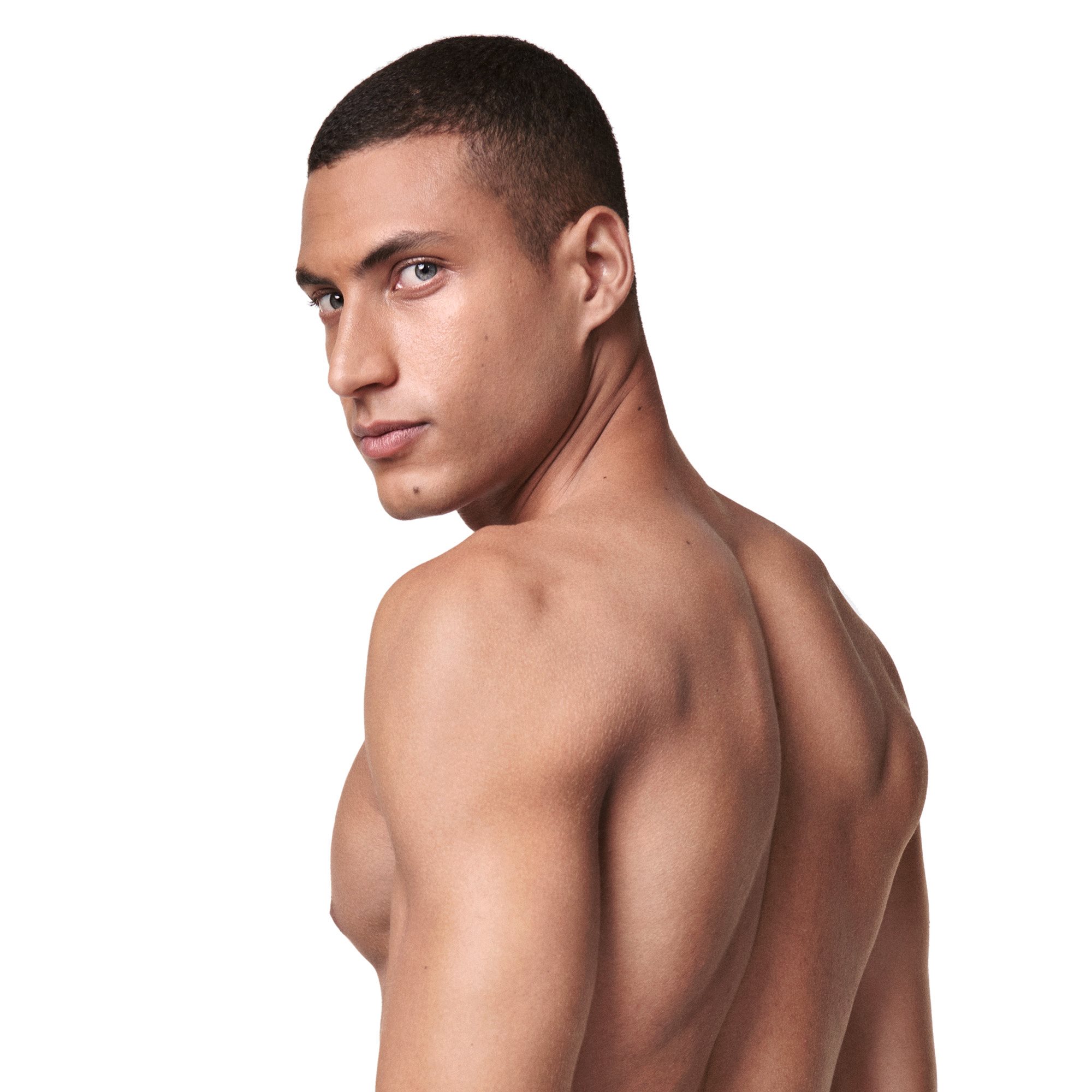
A man with his back facing the camera looking over his shoulder
Show more

Last Reviewed: April, 2026

Blemishes on the back and shoulders are a common skin concern that can affect people of all ages. Clinical studies show that for people affected by blemishes, more than half experience both facial and body breakouts, with the back and chest among the most affected areas.1

Back pimples may appear as blocked pores, small blemishes or more inflamed spots, depending on individual skin factors and triggers2. Although they can feel difficult to manage, a consistent skincare routine using dermatologist-recommended ingredients can help visibly reduce breakouts and improve the overall clarity and appearance of the skin over time.
What are back pimples?

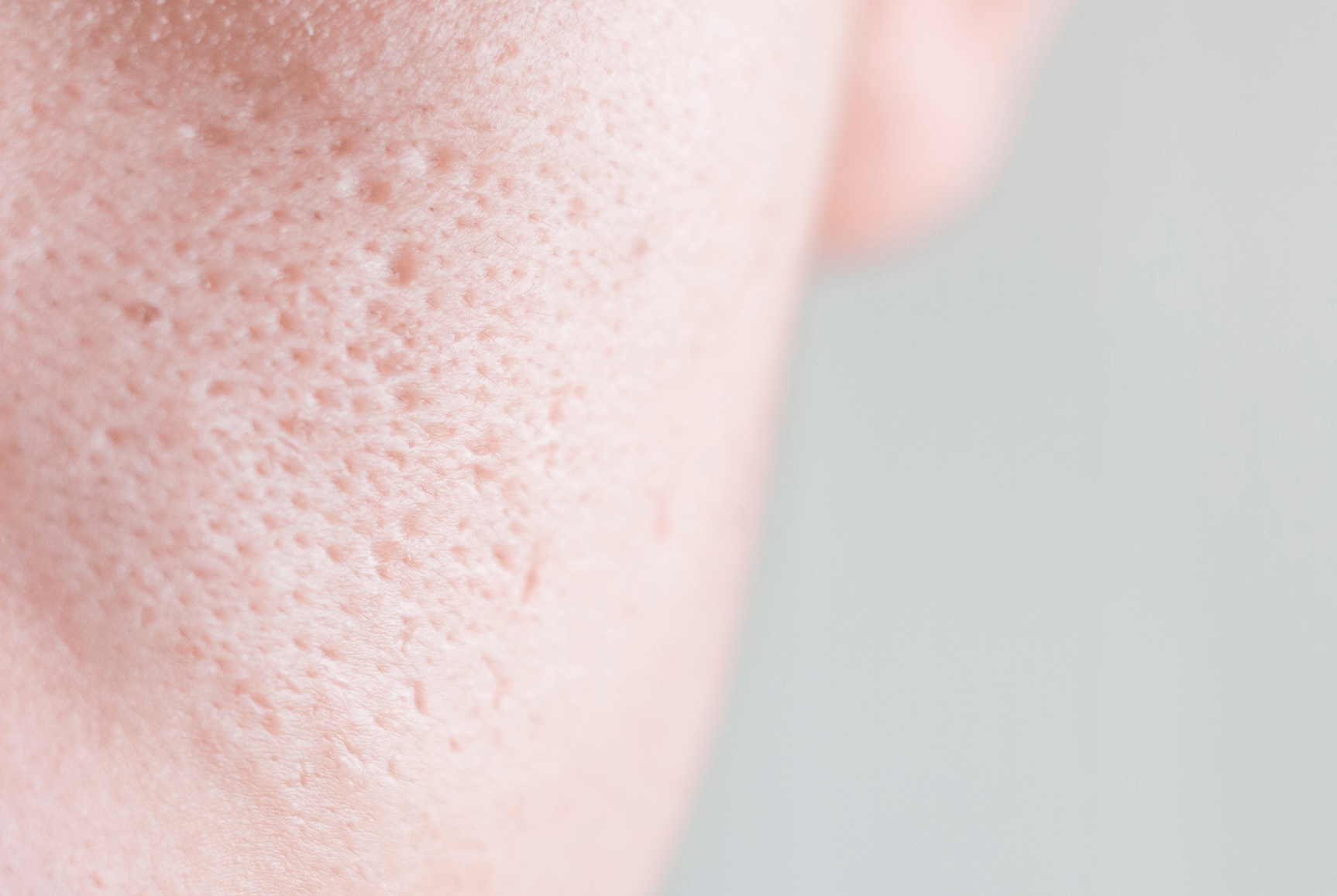
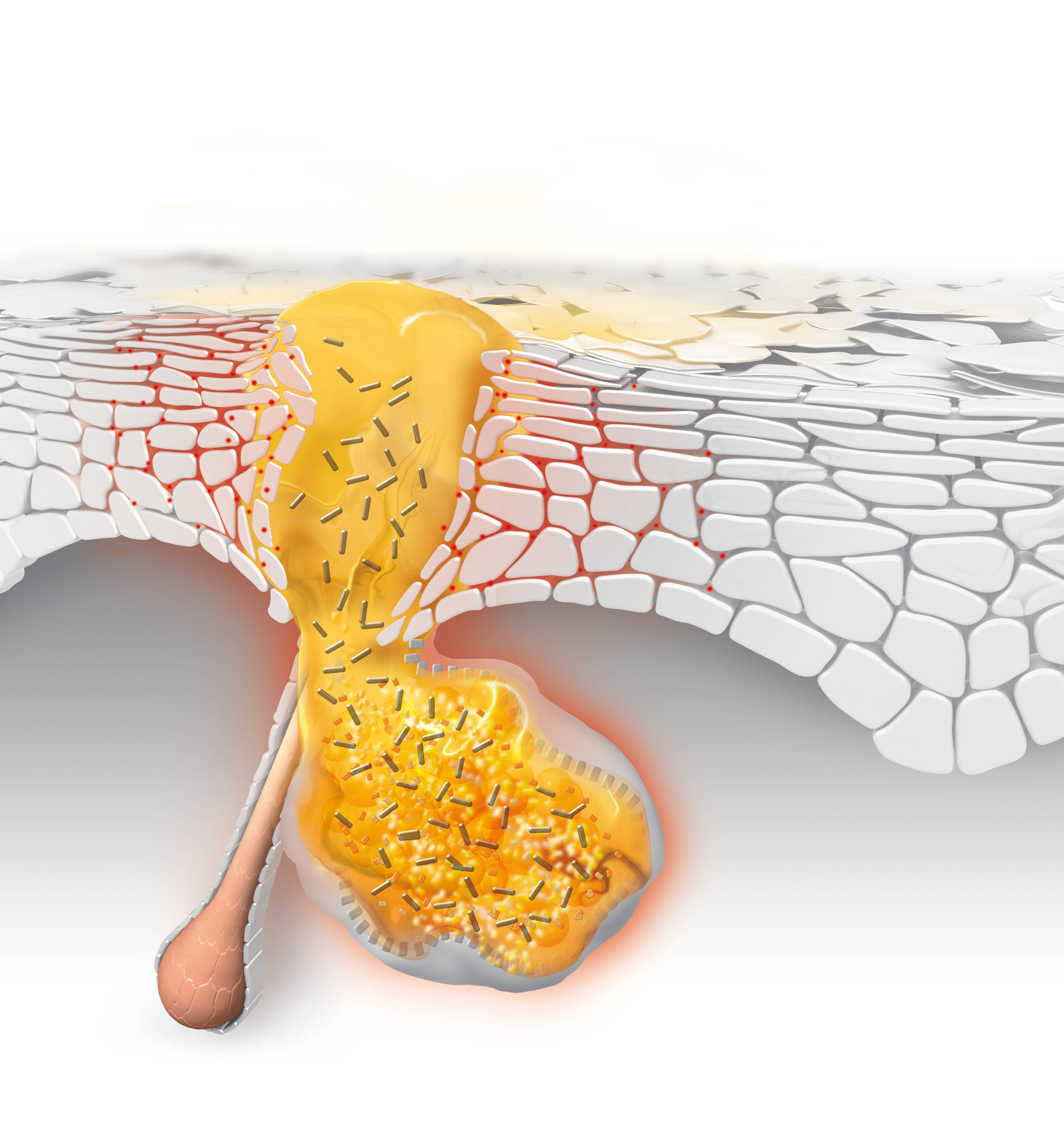
diagram of a blocked pore resulting in a pimple
Oily skin and pimples on the body often go hand in hand

Back pimples are a form of blemish that develops when pores on the back become blocked with excess oil, dead skin cells or bacteria. This build-up can lead to visible breakouts that range from small, clogged pores to inflamed pimples3.

They most commonly appear on the upper back and shoulders, where oil glands are larger and more active, but can also affect the chest and, in some cases, the lower back. As a result, these areas are more prone to excess sebum production, which can increase the likelihood of blocked pores.

Common types of back pimples

Back blemishes can appear in several different forms depending on how the pores are blocked and whether inflammation is present. Understanding the type of blemish can help guide the most appropriate skincare approach.4

Common types include:

  • Whiteheads (closed comedones): Small bumps with a white centre caused by blocked pores beneath the skin.4
  • Blackheads (open comedones): Non-inflamed spots with a dark surface due to oxidation.4
  • Red bumps (papules): Inflamed spots that can feel tender.4
  • Pustules: Inflamed blemishes with a visible white or yellow centre.4
  • Nodules: Larger, deeper lumps beneath the skin that may feel painful.4
  • Cysts: Deep, pus-filled lesions that may lead to post-blemish marks.4
Back pimples can range from non-inflamed blocked pores to deeper, inflamed lesions, depending on how severe the pore blockage and inflammation are.

What causes back pimples?

Understanding what causes back blemishes can help manage breakouts more effectively. They are typically triggered by a combination of internal factors, such as hormones, and external factors like sweat, friction and skincare habits5.

These triggers can vary from person to person, which is why a consistent and tailored skincare routine can help support clearer skin over time.

  • Excess oil production: Sebum can mix with dead skin cells and block pores.
  • Sweat and friction: Tight clothing and exercise can trap sweat and bacteria against the skin.
  • Hormonal changes: Fluctuations can increase oil production and contribute to congestion.
  • Bacteria build-up: Blocked pores create an environment where bacteria can multiply.
  • Pore-clogging products: Heavy or unsuitable body care can contribute to blocked pores.
These triggers can vary from person to person, which is why a consistent and tailored skincare routine is important.

Why do back pimples occur more often in men?

A shirtless man with his back facing the camera looking over his shoulder
Back pimples can be reduced with simple lifestyle changes and appropriate skincare

Back pimples can be more common in men due to higher levels of sebum (oil) production, which can increase the likelihood of pores becoming blocked. Men also tend to have thicker skin and greater activity in the oil glands on the back and shoulders, which may contribute to a higher tendency for breakouts in these areas.8

Why do pimples on the back sometimes itch so intensely?

Back pimples can feel itchy when inflammation irritates the surrounding skin or when pores become blocked, triggering a mild inflammatory response. Sweat, friction from clothing and heat can also make the skin feel more uncomfortable, particularly in areas where breakouts are more concentrated.8

How to help prevent back pimples

Daily habits can influence how easily pores become blocked and how often breakouts occur, so a consistent routine that avoids common triggers can help support clearer, more balanced-looking skin over time6. Small adjustments to skincare and everyday routines can also help improve skin comfort and clarity.

Common triggers to avoid: 

  • Harsh physical scrubs that may irritate the skin.
  • Tight or non-breathable clothing that traps heat and sweat.
  • Heavy or pore-clogging body products.
  • Picking or squeezing blemishes, which can worsen inflammation.

How to reduce back blemishes: a dermatologist-recommended routine

If you are wondering how to reduce back blemishes, consistency is key. A regular skincare routine using targeted ingredients can help minimise breakouts while supporting the skin’s natural balance.7

Dermatologists recommend combining effective cleansing with gentle exfoliation and targeted body care to help improve the appearance of blemishes over time.7

Step 1: Cleanse pimples on the back

Cleansing is the foundation of any effective back blemish routine. It helps remove excess oil, sweat and impurities that can clog pores and lead to breakouts. Using the right cleanser can support clearer skin from the first step of your routine. Choosing the right cleanser depends on your skin’s needs and the severity of your back blemishes.

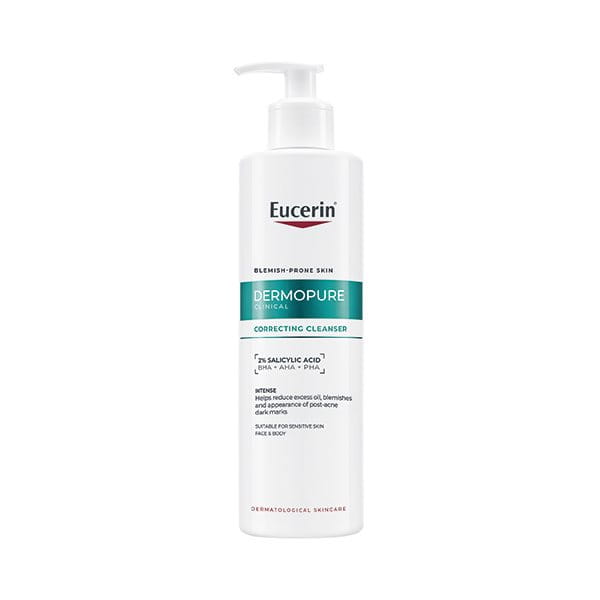
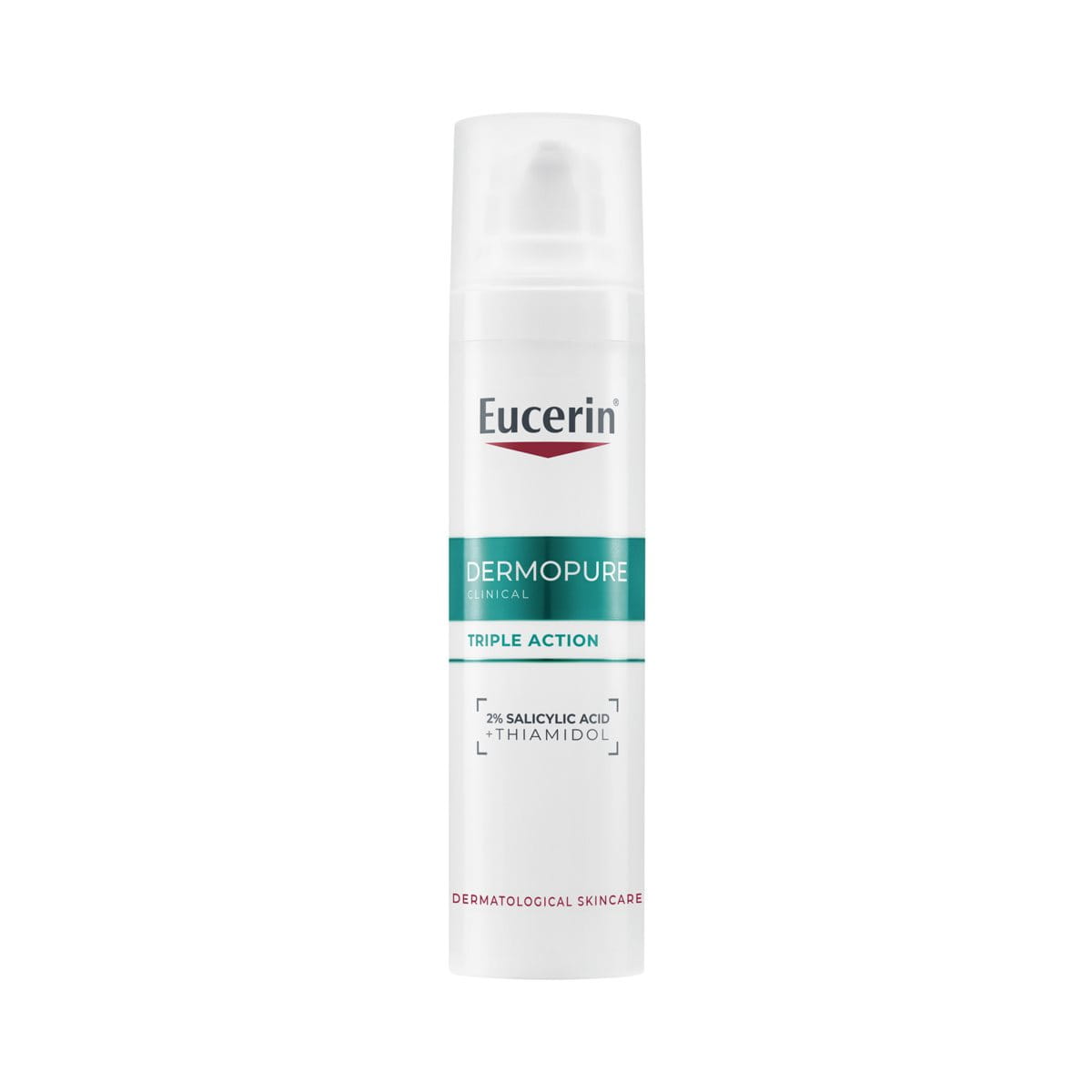
Eucerin Dermopure Clinical Correcting Cleanserfor active blemishes and marks: This advanced cleanser is designed for oily and blemish-prone skin with visible breakouts. It contains a serum-like concentration of active ingredients, including 2% Salicylic Acid, AHA and PHA. Clinically and dermatologically proven to reduce oil, help correct blemishes and improve post-blemish marks while remaining non-comedogenic and suitable for sensitive skin.

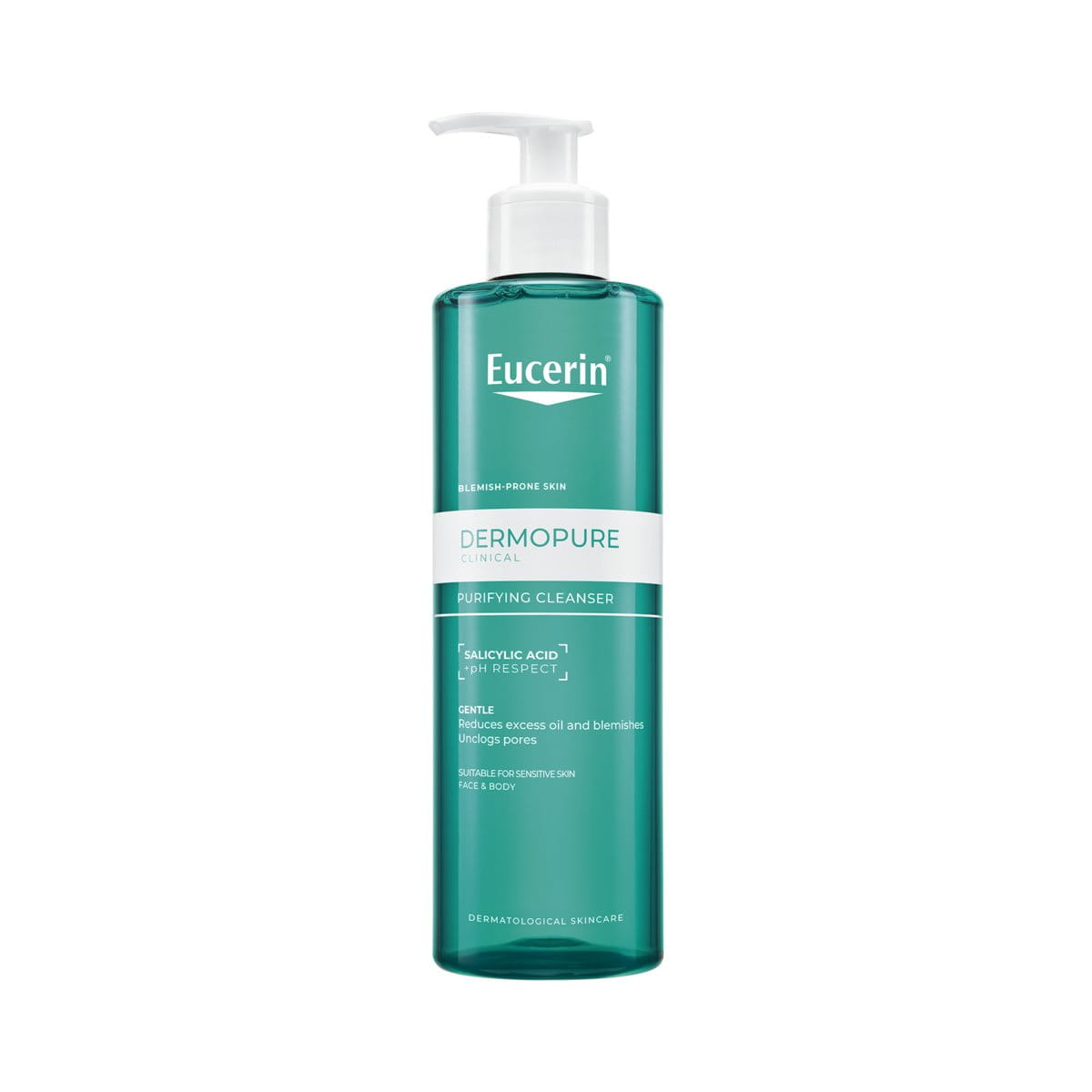
Eucerin Dermopure Clinical Purifying Cleanserfor oil control and prevention: This gentle cleanser is ideal for early-stage breakouts and oil control. Its minimal formula contains Salicylic Acid and is free from fragrance and soap. Clinically proven to reduce the appearance of pores, decrease comedones and control oiliness without drying the skin.
Using a cleanser with Salicylic Acid helps unclog pores and visibly reduce blemishes from the first step.

Step 2: Maintain hydration with targeted body care

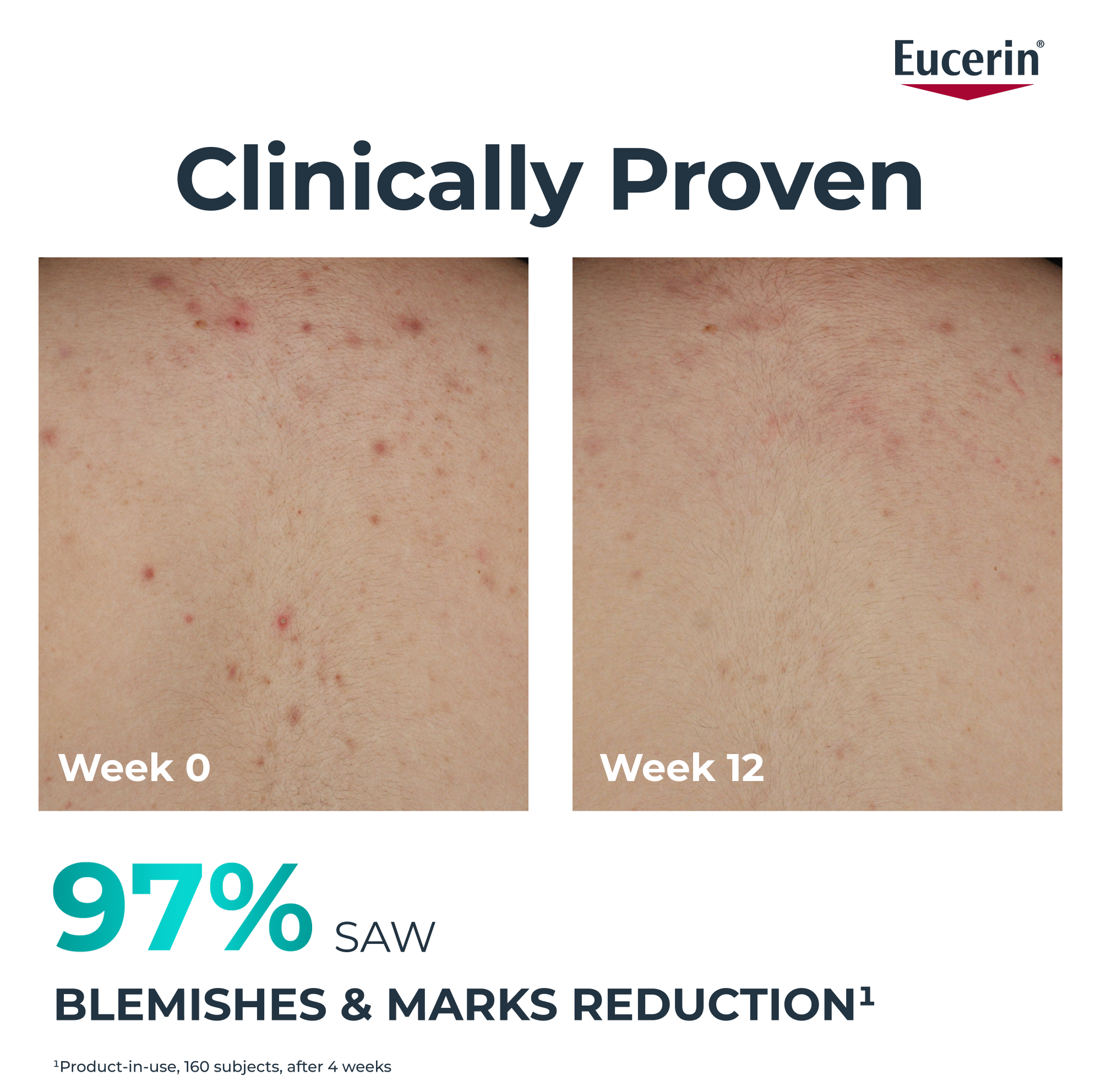
Before and after images of a Product-in-use test with 160 subjects over 4 weeks which resulted in 97% of the subjects seeing a reduction in blemishes and marks
Eucerin Dermopure Clinical Correcting Body Care is effective while caring for the skin

After cleansing, applying a targeted body product helps support the skin and maintain hydration. This step is essential for improving both active blemishes and post-blemish marks. 

Consistent use of the right formula can help promote smoother and more even-looking skin:

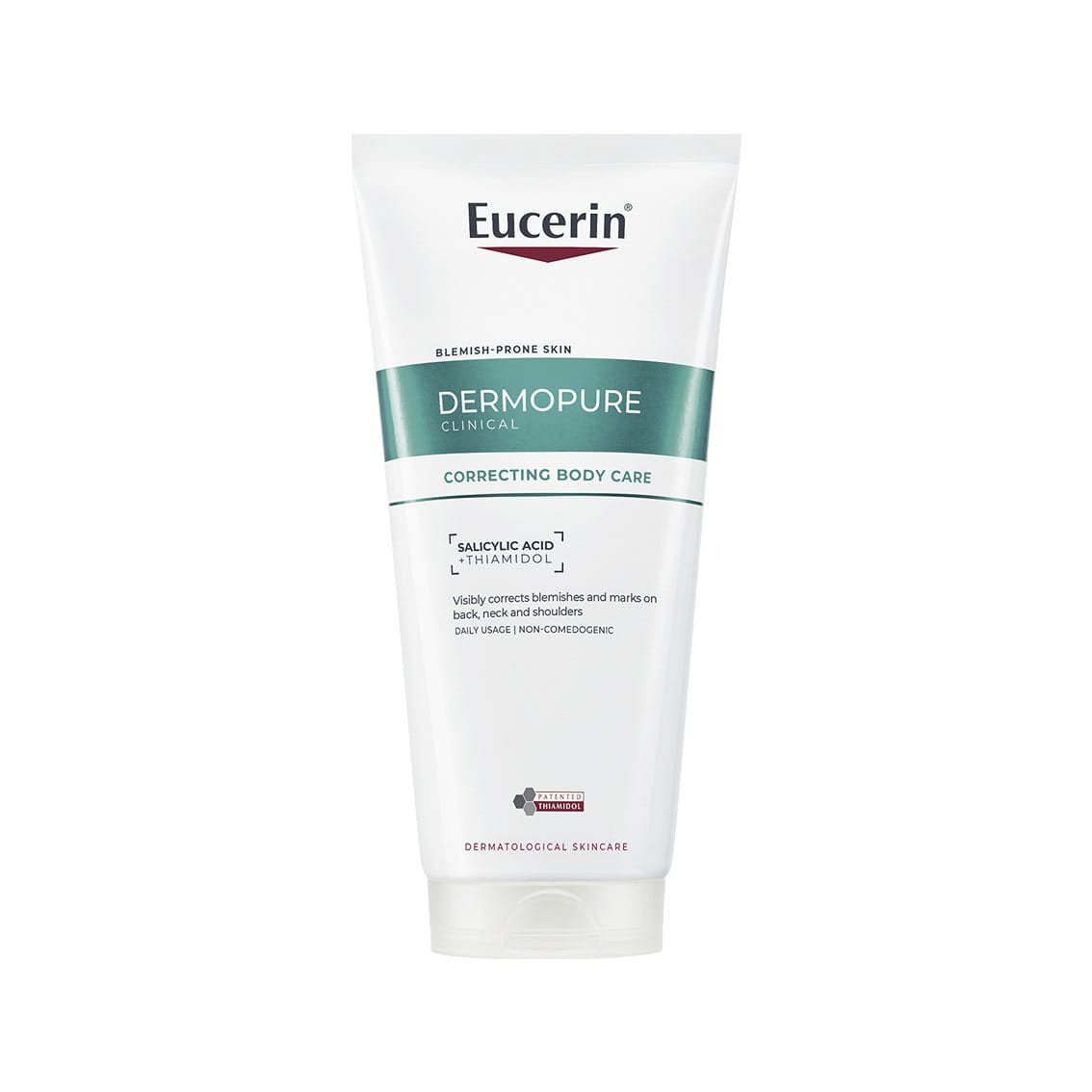
Eucerin Dermopure Clinical Correcting Body Care: This lightweight body lotion is clinically proven to provide 48-hour hydration and visibly reduce blemishes and dark marks within two weeks. It is suitable for oily, blemish-prone and sensitive skin. It combines Salicylic Acid to help exfoliate pores with patented Thiamidol to reduce the appearance of post-blemish marks.

How to reduce the appearance of post-blemish marks

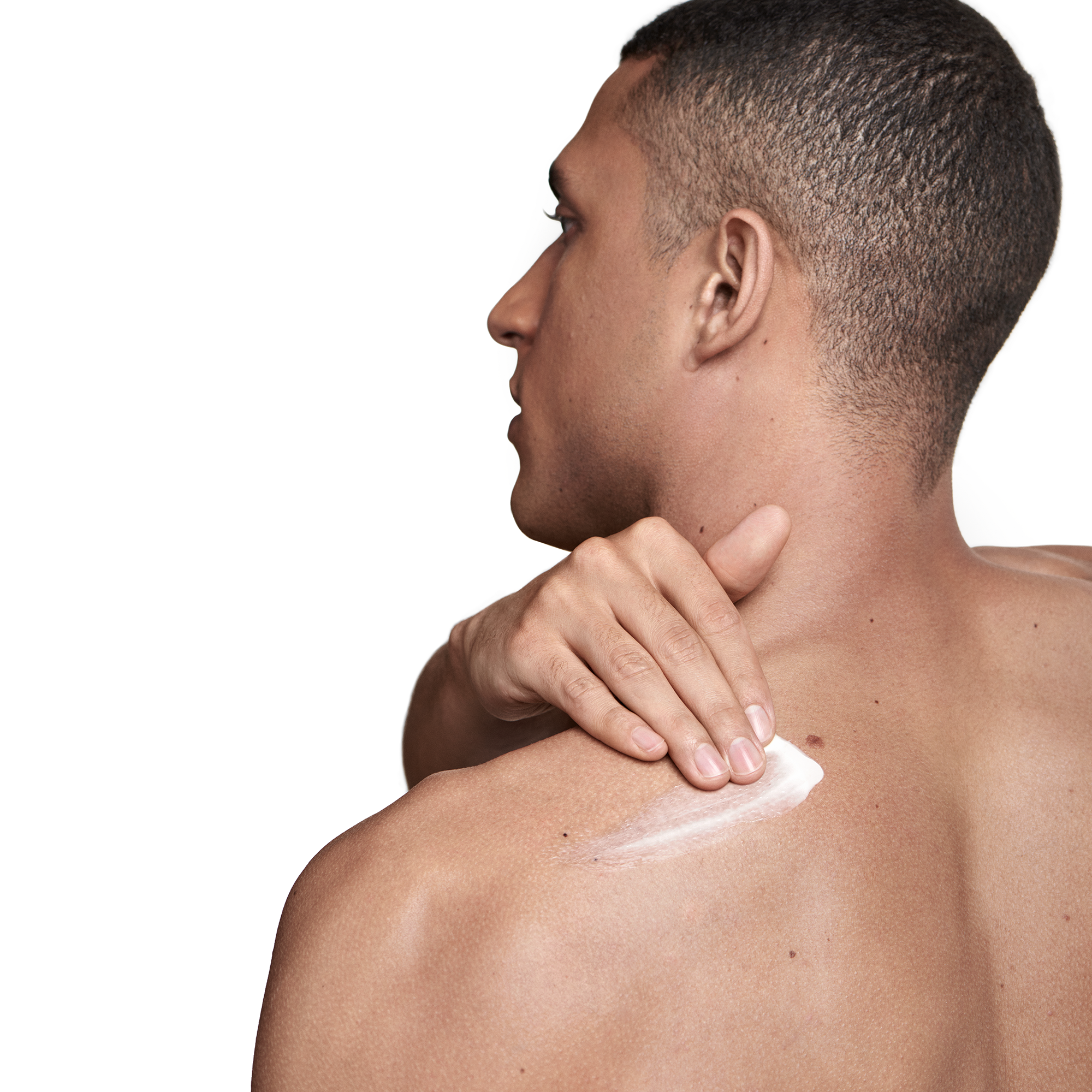
Back view of a man applying cream to his upper back and shoulder.
Specifically designed for blemish-prone skin, this lightweight body lotion combines Salicylic Acid and patented Thiamidol.

Post-blemish marks can linger long after breakouts have cleared, showing up as uneven skin tone or discolouration. This happens because inflammation from acne can trigger post-inflammatory hyperpigmentation, a process where the affected area becomes darkened even after the skin has otherwise healed. These marks can be stubborn, but consistent use of targeted skincare can make a real difference.

Eucerin Dermopure Clinical Correcting Body Care is specifically formulated to tackle post-blemish marks, using the power of Thiamidol to address hyperpigmented areas and help restore a more even-looking complexion over time.

Sun protection for blemish-prone skin on the back

Sun exposure can make post-blemish marks more visible and may slow skin recovery. Daily use of a high-factor SPF helps protect the skin and supports a more even-looking complexion over time9.

Lightweight, non-comedogenic formulas are recommended for breakout-prone areas such as the back and shoulders.

Post-blemish marks can improve over time with consistent skincare and daily sun protection.

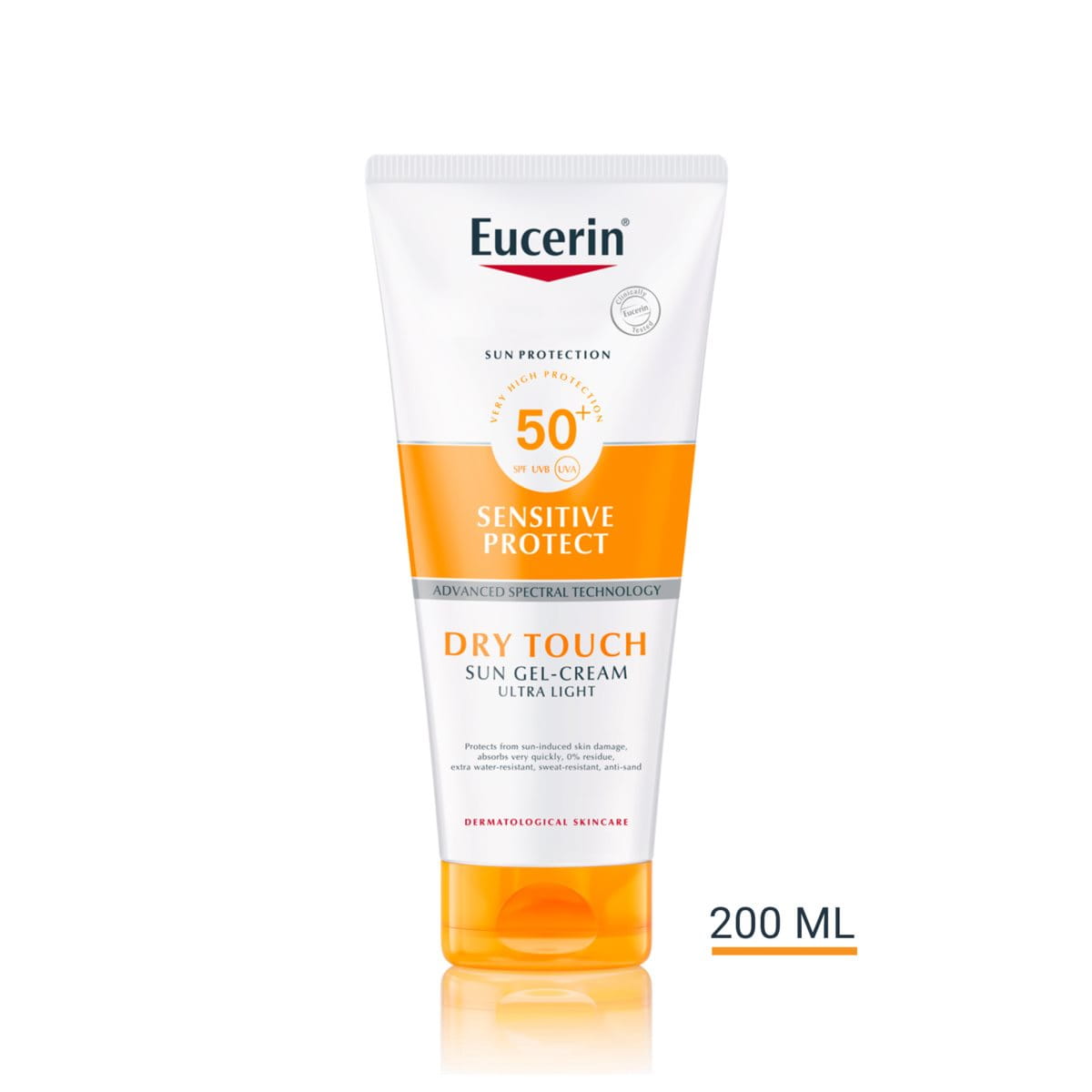
Recommended product: Eucerin Sun Gel-Cream Dry Touch Oil Control SPF 50+

This high protection body sunscreen is suitable for all skin types, including sensitive, oily and breakout-prone skin. It provides UVA/UVB protection and HEVIS light defence to help protect against sun-induced skin stress. 

The Oil Control technology delivers an immediate dry touch finish with a mattifying effect, helping to reduce shine on the skin. The lightweight texture absorbs quickly, making it suitable for daily use on larger areas of the body.

How long does it take for back pimples to improve?

The time it takes for back blemishes to improve can vary depending on severity and skincare consistency2. With regular use of targeted products, visible improvements are often seen within a few weeks.

Maintaining a consistent routine is key to supporting long-term skin clarity.

When should you seek professional advice?

In some cases, back blemishes may require medical advice, particularly if they are severe, persistent or causing discomfort. Seeking professional guidance can help ensure the most appropriate treatment approach.

Key takeaways for back pimples and clearer skin

Back blemishes are a common condition that can be managed with a consistent and targeted approach. Understanding the causes and choosing the right products can help support clearer skin over time.

A routine that includes effective cleansing, targeted care and daily protection can help improve the appearance of blemishes and post-blemish marks while supporting overall skin health.

Frequently asked questions about bacne (7)

  • What is the most effective way to reduce back blemishes?

    The most effective approach combines a Salicylic Acid cleanser, such as Eucerin Dermopure Clinical Correcting or Purifying Cleanser, with targeted body care and consistent daily skincare. This helps unclog pores, reduce excess oil and improve the appearance of blemishes over time.
  • How do I get rid of bacne quickly?

    While results vary, consistent use of targeted skincare such as products from the Eucerin Dermopure Clinical range can help visibly reduce bacne within a few weeks. Cleansing after sweating and avoiding pore-clogging products can also support faster improvement.
  • What causes back pimples in females?

    Back pimples in females are often linked to hormonal fluctuations, as well as factors such as sweat, friction and skincare products. These can increase oil production and contribute to blocked pores.
  • Can Salicylic Acid help clear back pimples?

    Yes, Salicylic Acid helps exfoliate inside the pores and reduce the build-up of oil and dead skin cells. This makes it an effective ingredient for managing bacne.
  • How can I prevent back pimples?

    Maintaining a consistent cleansing routine, wearing breathable clothing and using non-comedogenic products can help prevent breakouts. Showering after sweating is also important.
  • How long does it take for bacne to clear?

    With regular use of targeted skincare, improvements are often visible within a few weeks. More persistent cases may take longer and benefit from professional advice.
  • How to clear post-blemish marks on the back?

    Post-blemish marks on the back can fade gradually with consistent skincare. Ingredients that support skin renewal can help improve uneven skin tone over time. Eucerin Dermopure Correcting Body Care can help improve the appearance of marks, while daily SPF helps prevent them from becoming more visible. Finally, Thiamidol works by targeting the root cause of hyperpigmentation, making it particularly effective at visibly reducing post-blemish marks on the back, where breakouts and the marks they leave behind can be especially persistent. 

Related Articles

Citations

  1. Tan, J. K. L.; Bhate, K. A Global Perspective on the Epidemiology of Acne. British Journal of Dermatology 2015, 172 (Suppl. 1), 3–12. https://doi.org/10.1111/bjd.13462
  2. National Health Service (NHS). Acne. https://www.nhs.uk/conditions/acne/
  3. American Academy of Dermatology Association. Back Acne: How to See Clearer Skin. https://www.aad.org/public/diseases/acne/DIY/back-acne
  4. American Academy of Dermatology Association. Acne: Overview. https://www.aad.org/public/diseases/acne/really-acne/overview
  5. American Academy of Dermatology Association. What Causes Acne? https://www.aad.org/public/diseases/acne/causes/acne-causes
  6. Healthline. How to Get Rid of Back Acne. https://www.healthline.com/health/how-to-get-rid-of-back-acne
  7. American Academy of Dermatology Association. Acne Skin Care: Tips Dermatologists Give Their Patients. https://www.aad.org/public/diseases/acne/skin-care/tips
  8. Del Rosso, J. Q. The Role of Skin Care as an Integral Component in the Management of Acne Vulgaris: Part 1: The Importance of Cleanser and Moisturizer Ingredients, Design, and Product Selection. Journal of Clinical and Aesthetic Dermatology 2013, 6 (12), 19–27. https://pmc.ncbi.nlm.nih.gov/articles/PMC3997205/
  9. Davis, E. C.; Callender, V. D. Postinflammatory Hyperpigmentation: A Review of the Epidemiology, Clinical Features, and Treatment Options in Skin of Color. Journal of Clinical and Aesthetic Dermatology 2010, 3 (7), 20–31. https://pmc.ncbi.nlm.nih.gov/articles/PMC2921758/

Find your nearest Eucerin pharmacy