Hyaluronic Acid Benefits for Skin: What It Does and How to Use It
Show more
Last Reviewed: March 2026
Hyaluronic Acid is a naturally occurring substance in the skin that draws in and retains moisture, helping skin stay hydrated, plump, and elastic. As we age, natural levels of Hyaluronic Acid decline, leaving skin drier, less resilient, and more prone to fine lines and wrinkles.1
In this guide, we explain how Hyaluronic Acid works, the different types used in skincare, and how to incorporate it into your routine to maintain healthy, hydrated, and youthful-looking skin.
What is Hyaluronic Acid and how does it work?
Hyaluronic Acid plays a crucial role in the skin's moisture levels.
Found within the skin’s connective tissue, Hyaluronic Acid is a naturally present substance that works alongside Collagen and Elastin to maintain hydration, firmness, and elasticity. As a powerful humectant, it attracts and retains water, helping to keep skin plump, smooth, and resilient. This moisture-binding ability supports the skin’s structure and enhances its overall appearance.2
Hyaluronic Acid is essential for maintaining skin moisture, elasticity, and structural support, especially in ageing skin.
What does Hyaluronic Acid do for the skin?
Hyaluronic Acid supports skin hydration, helping to maintain a smooth, plump, and resilient appearance. By attracting and retaining moisture, it reinforces the skin’s structure and enhances overall suppleness.1
Key benefits:
Deep hydration: Hyaluronic Acid attracts and holds water in the skin, helping maintain optimal moisture levels and preventing dryness.
Improves elasticity and flexibility: By supporting the skin’s connective tissue, it enhances suppleness and helps reduce the appearance of fine lines and wrinkles.
Supports anti-ageing: Restoring Hyaluronic Acid helps plump the skin, smooth fine lines, and reduce visible signs of ageing.
Promotes skin repair: Hyaluronic Acid contributes to the skin’s natural repair processes, supporting recovery after minor irritation or damage.1
Types of Hyaluronic Acid and their effects on the skin
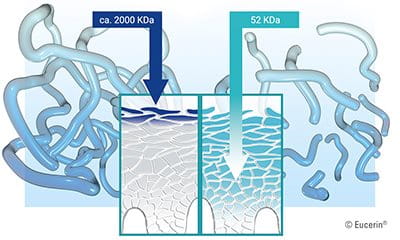
High molecular Hyaluronic Acid | Low molecular Hyaluronic Acid
Hyaluronic Acid comes in different molecular weights, and each type has a distinct effect on the skin. Using formulations that combine multiple types can help target both surface-level dryness and deeper wrinkles, supporting overall skin hydration, elasticity, and resilience.
There are three main types of Hyaluronic Acid used in topical skincare:
High molecular Hyaluronic Acid (also known as long-chained). This remains on the skin’s surface and works to improve hydration in the outermost layer of the epidermis, where fine lines and winkles originate.
Medium molecular Hyaluronic Acid (also known as medium-chained) works in a similar way to high molecular Hyaluronic Acid.
Low molecular Hyaluronic Acid (also known as short-chained). With molecules that are 40 times smaller* than those of high molecular Hyaluronic Acid, low molecular Hyaluronic Acid penetrates further into the epidermal layers, where it stimulates the skin’s own production of Hyaluronic Acid, replenishing moisture where deeper wrinkles originate.
Eucerin uses both high and low molecular Hyaluronic Acid in their Hyaluron-Filler range formulas (excluding the Moisture Booster) to effectively target and plump wrinkles from the inside out.
All Eucerin formulas are the result of innovative research and development and 130 years of skincare expertise. They are clinically and dermatologically proven to be both highly effective and well tolerated by the skin.
* The standard unit for measuring the mass of an atom is a kilo Dalton (kDa). High molecular Hyaluronic Acid has a kDa of 2000, and low molecular Hyaluronic Acid has a kDa of 52.
How to replenish Hyaluronic Acid and protect your skin
Maintaining healthy Hyaluronic Acid levels requires a combination of targeted skincare and supportive lifestyle habits. Together, these help skin stay hydrated, smooth, and resilient.2
Topical skincare:
Choose products containing both high and low molecular Hyaluronic Acid to target surface dryness and deeper wrinkles.
Consistent use of formulas designed for Hyaluronic Acid supplementation can help maintain optimal moisture and improve skin texture.2
Lifestyle habits:
Protect skin from UV exposure with daily SPF to prevent Hyaluronic Acid breakdown.
Keep skin hydrated through a balanced diet and regular moisturising.
Support natural repair processes with adequate sleep and stress management.3
Combining targeted Hyaluronic Acid skincare with healthy lifestyle habits helps maintain long-lasting hydration, smoother skin, and a plumper, more resilient appearance.
Benefits of combining Hyaluronic Acid, Epicelline and Glycine Saponin
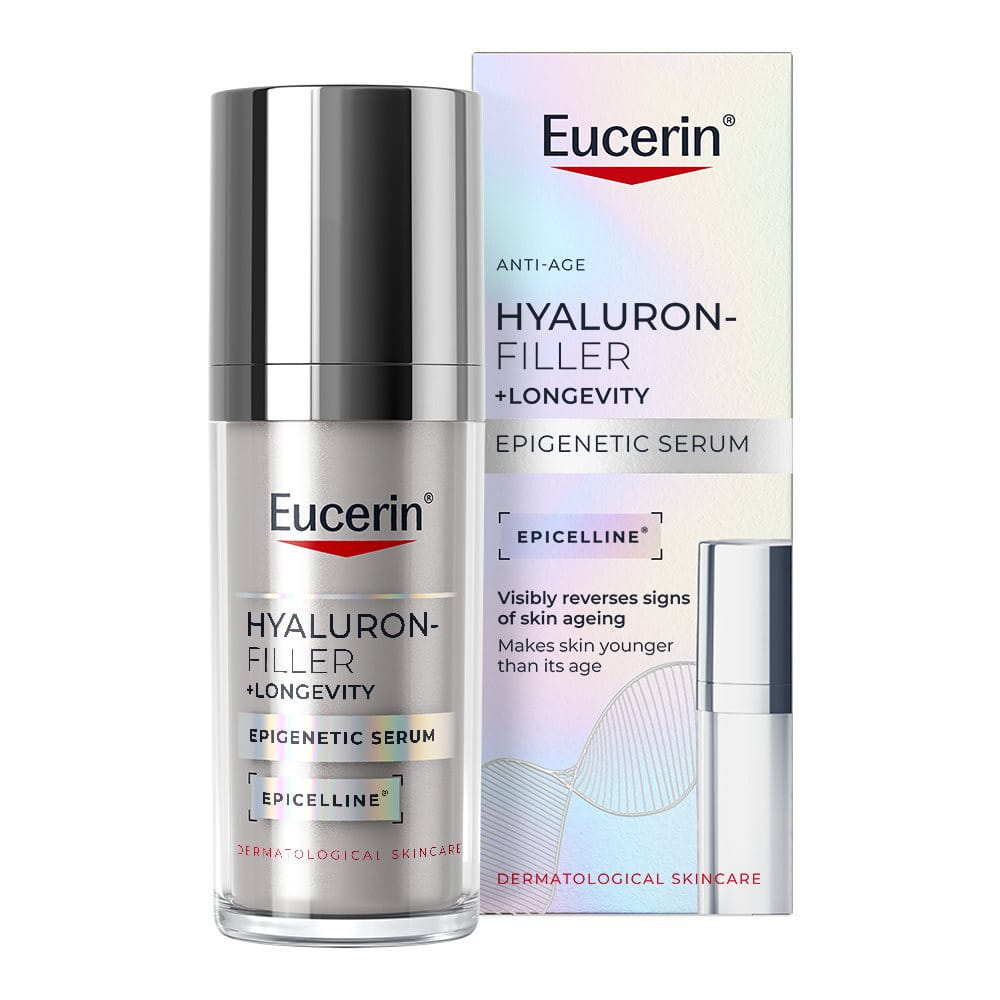
The powerful formula in the Hyaluron-Filler + Longevity Epigenetic Serum combines active ingredients.
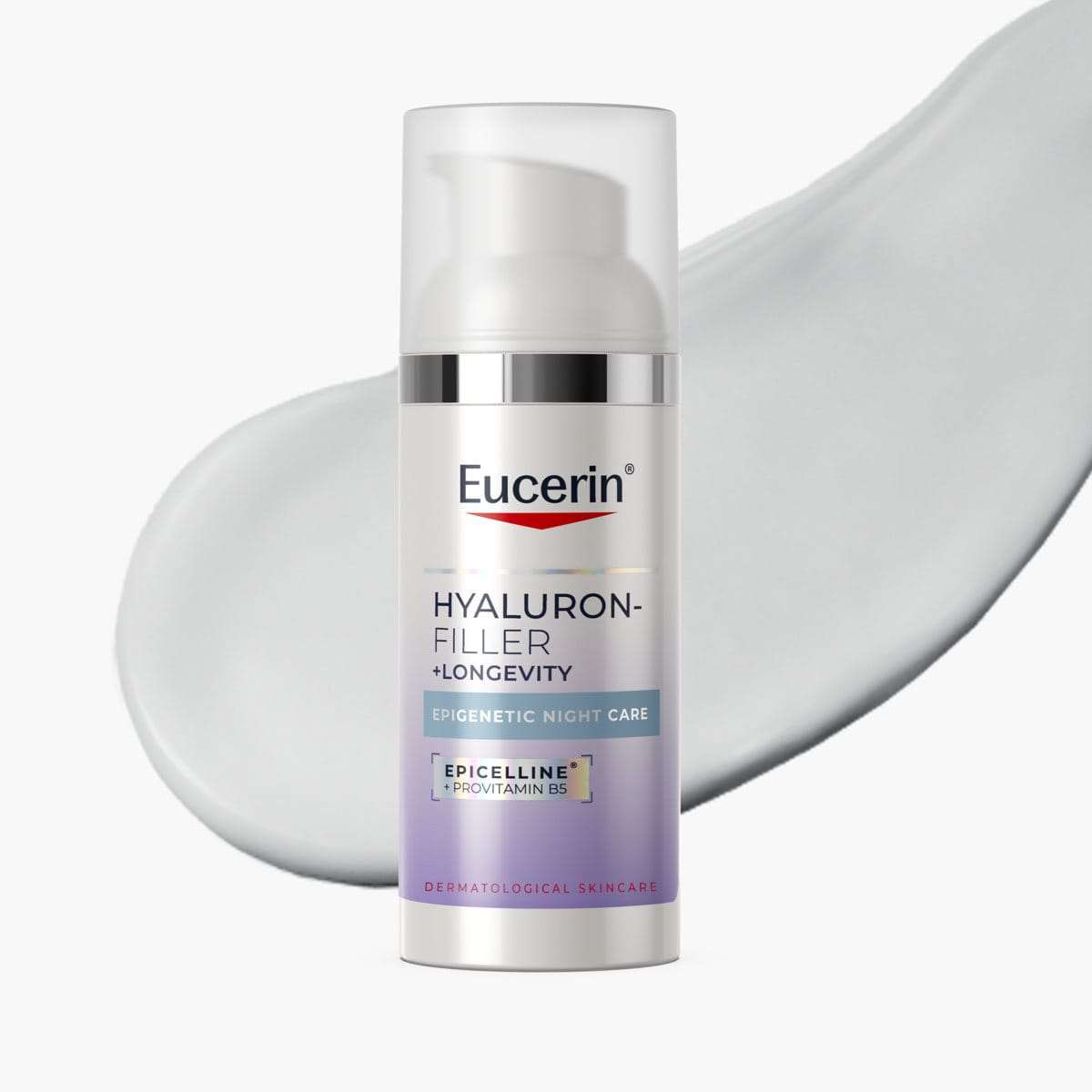
The revolutionary Eucerin Epigenetics range was developed after 15 years of epigenetic research to help support youthful-looking skin. It includes the Hyaluron-Filler + Longevity Epigenetic Serum, as well as a range of additional supportive products, including day and night creams, all enriched with the active ingredient Epicelline to help target visible signs of ageing.3
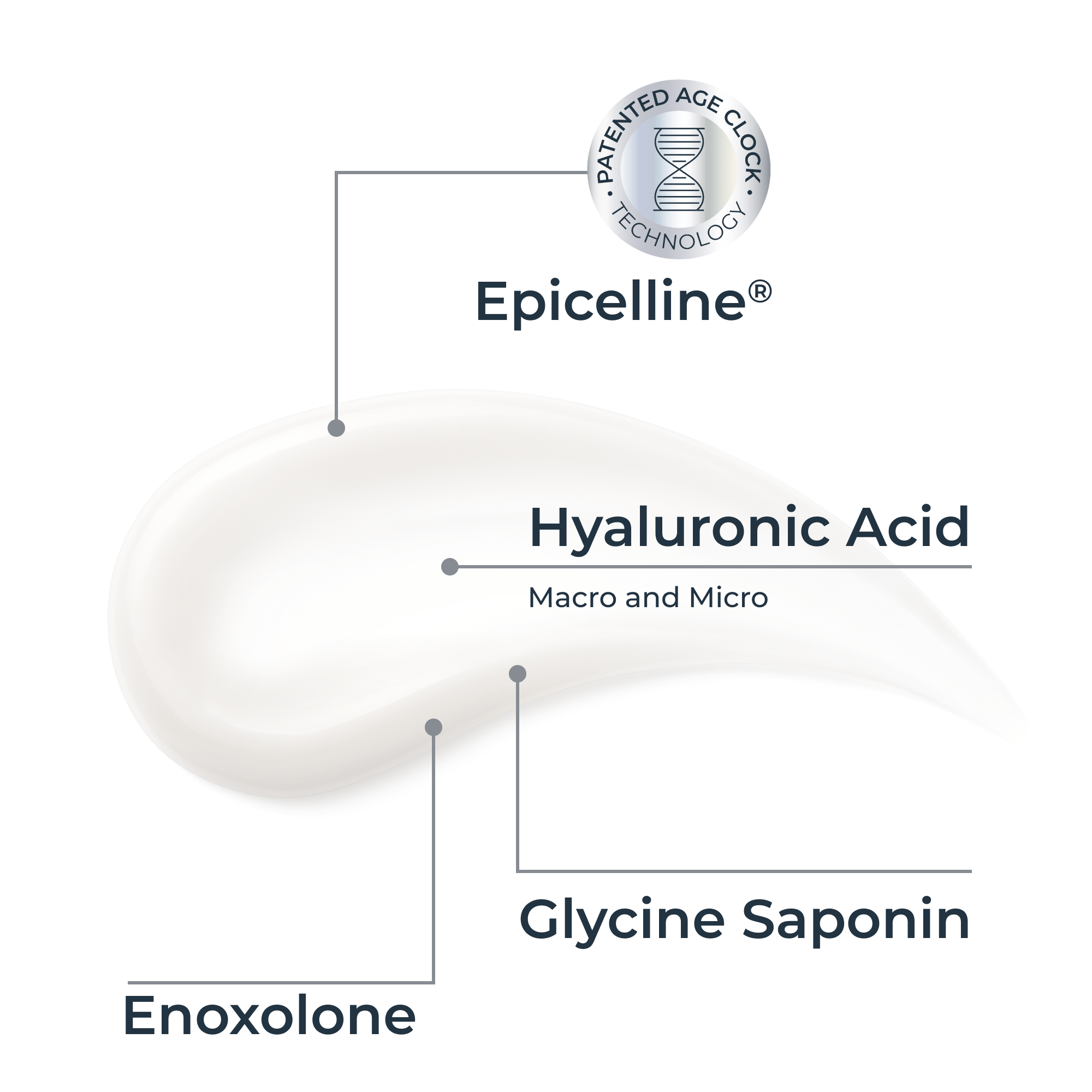
The Hyaluron-Filler + Longevity Epigenetic Serum combines Hyaluronic Acid, Epicelline, Glycine Saponin, and Enoxolone, tapping into the skin's cellular memory and supporting hydration, smoothness, and resilience. Clinical studies show visible results in four weeks for this serum*.
Hyaluronic Acid retains moisture and supports the skin’s connective tissue.
Epicelline visibly improves skin’s firmness and smoothness
Glycine Saponin is a soybean-derived active that has been shown in Beiersdorf in vitro studies to significantly stimulate Hyaluronic Acid production in dermal cells by up to 256% at a cellular level.**
*Clinical studies over 2 and 4 weeks with 43 volunteers respectively. Product-in-use test over 4 weeks with 160 volunteers (Hyaluron-Filler Epigenetic Serum).
**Study report: Saponins – a new generation of Hyaluronan-stimulating actives for human skin, S. Gallinat, F. Rippke, C. Keppler, J. Mergell, A. Bürger, F. Stäb, H.Wenck Beiersdorf AG, Hamburg, Germany
Supporting Hyaluronic Acid in your skin requires a simple, consistent routine that combines targeted skincare with protective habits. Here’s a dermatologist-approved approach using the Eucerin Hyaluron-Filler range:
Step 1: Cleanse gently
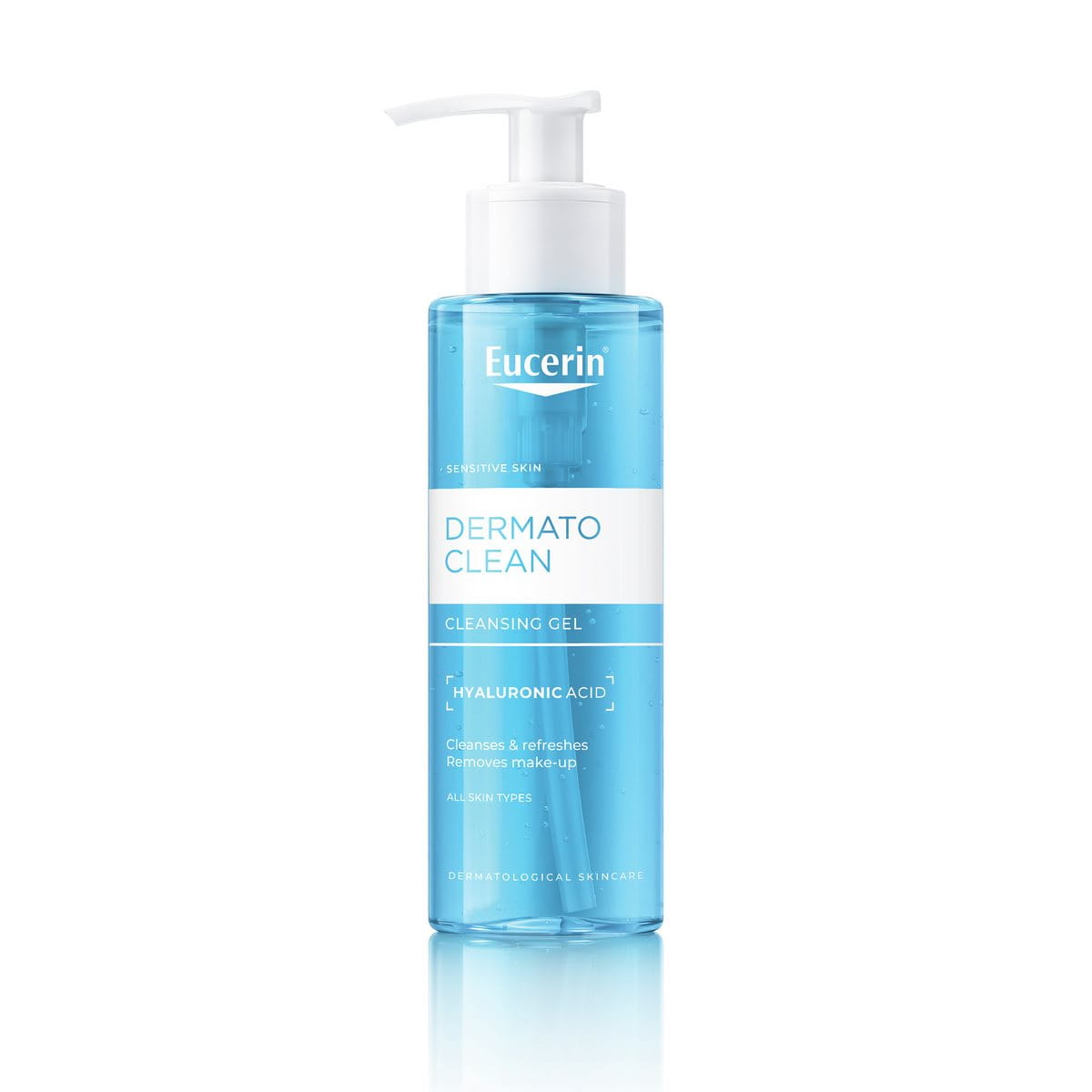
Start your routine with a Hyaluronic Acid-infused cleanser, such as Eucerin DermatoClean Cleansing Gel. This gentle yet effective formula removes make-up and impurities while supporting skin’s moisture levels. Skin feels clean, soothed, and ready to absorb active ingredients for hydration and renewal.
Step 2: Apply serum
Once the skin has been cleansed, choose a serum to target hydration and anti-ageing:
Eucerin Hyaluron-Filler + Longevity Epigenetic Serum - Combines high and low molecular Hyaluronic Acid with Epicelline, Glycine Saponin, and Enoxolone. It hydrates the skin’s surface, helps replenish moisture in deeper layers, and supports a smoother, more resilient-looking complexion.
Eucerin Hyaluron-Filler +3x Effect Firming Serum - Focuses on firming and lifting, combining Hyaluronic Acid with additional actives to target wrinkles, improve skin elasticity, and strengthen the skin’s structure.
Step 3: Hydrate and protect
After applying serum, follow with a moisturiser to lock in hydration and support the skin barrier. This helps seal in active ingredients and maintain skin comfort throughout the day and night.
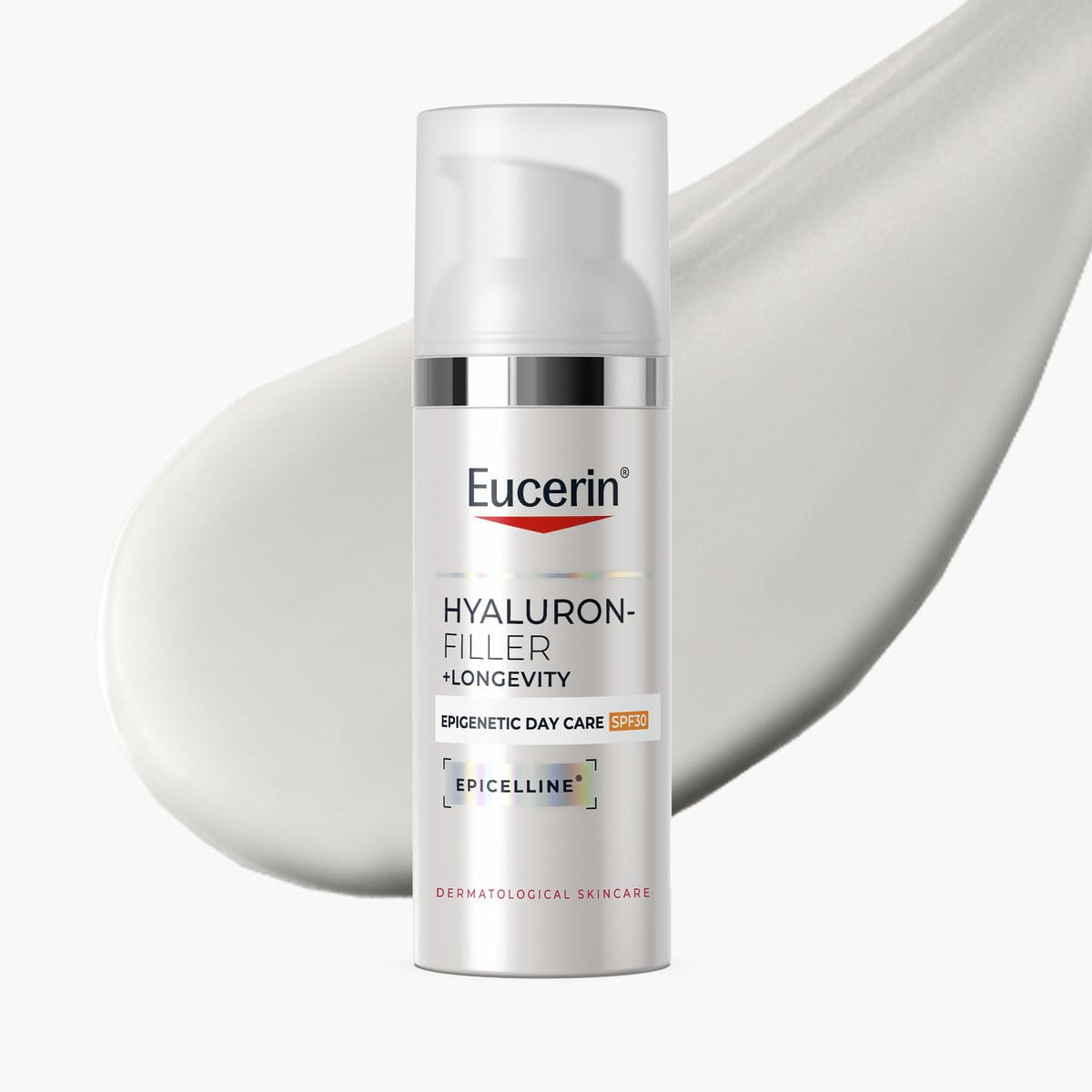
AM: ApplyEucerin Hyaluron-Filler + Longevity Epigenetic Day Care SPF 30 for hydration and sun protection. This formula contains Epicelline to help work on visible signs of ageing supporting the skin’s structure and leaving it smoother and more resilient.
Recommended daily routine with Hyaluronic Acid and Collagen
For more visible signs of ageing and deeper wrinkles, you can enhance your routine by adding products that support the production of Hyaluronic Acid and Collagen for firmer, more resilient skin. This routine combines Eucerin Hyaluron-Filler + Elasticity products, providing extra elasticity support and focusing on the skin structure and firmness:
Step 1: Cleanse gently
Start with a Hyaluronic Acid-infused cleanser like Eucerin DermatoClean Micellar Water. It removes make-up and impurities while keeping skin moisturised and soothed, ready for active ingredients.
Step 2: Apply serum
Apply Eucerin Hyaluron-Filler + Elasticity 3D Serum to help improve the appearance of deeper wrinkles, support skin firmness and elasticity, and leave skin looking smoother and more even. This formula combines Hyaluronic Acid with active ingredients, including Thiamidol, to help maintain hydrated, supple-looking skin, improve the appearance of dark spots and uneven skin tone, and support a more youthful-looking complexion over time.
Step 3: Hydrate and protect
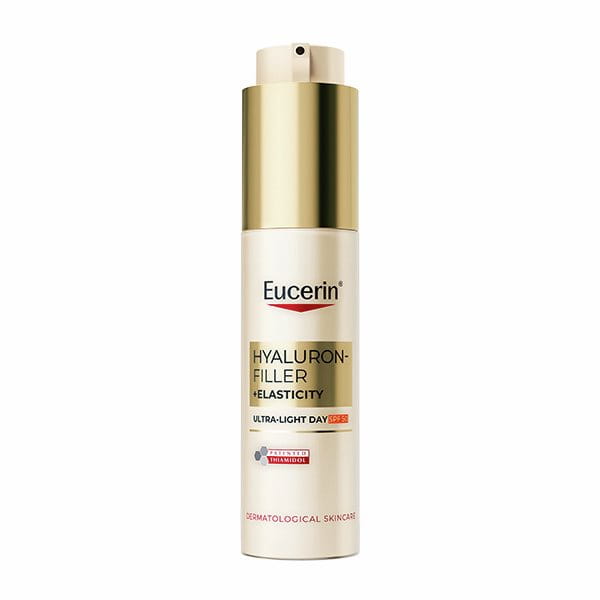
Apply Eucerin Ultra-light Day SPF 50 to the face and neck to lock in moisture, support skin elasticity, and provide high daily UVA and UVB protection. This lightweight formula helps protect the skin from sun-induced damage and supports a more hydrated, smooth, and comfortable skin feel throughout the day. It also contains Thiamidol, which helps reduce the appearance of dark spots and uneven skin tone.
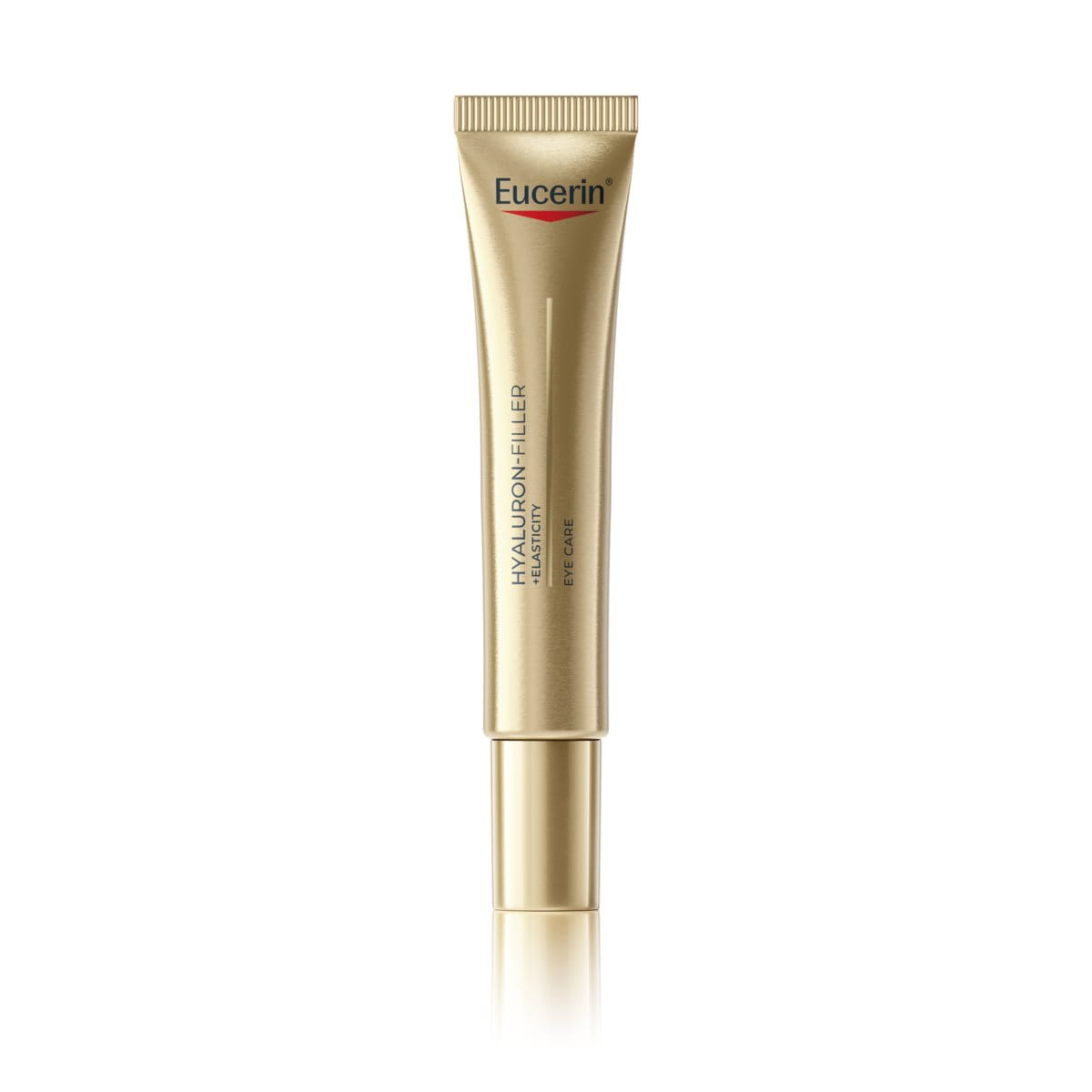
Follow with Eucerin Hyaluron-Filler + Elasticity Eye Care, gently patting around the eye area to help maintain hydration and improve the appearance of fine lines in the delicate eye area.
Hyaluronic Acid is a cornerstone of skin hydration and anti-ageing care. Using both high and low molecular Hyaluronic Acid provides benefits for the skin’s surface and deeper layers. Eucerin’s Hyaluron-Filler range enhances these effects by combining Hyaluronic Acid with active compounds like Epicelline, Glycine Saponin, and Enoxolone, supporting the skin’s natural renewal processes and helping maintain its natural Hyaluronic Acid levels.
Combining Hyaluronic Acid and Collagen-supporting products with sun protection helps maintain hydration, elasticity, and a more resilient, youthful appearance.
Daily support with targeted skincare, sun protection, and healthy habits helps maintain smoother, plumper, and more resilient-looking skin over time.
Hyaluronic Acid is a naturally occurring molecule in the skin that attracts and holds water. It helps maintain hydration, supports elasticity, and strengthens the skin’s structure, keeping skin smooth, plump, and resilient.
Hyaluronic Acid retains moisture in the skin and supports the connective tissue. Low molecular Hyaluronic Acid penetrates deeper layers to stimulate the skin’s natural production of Hyaluronic Acid, while high molecular Hyaluronic Acid hydrates the surface to reduce fine lines.
Yes, Hyaluronic acid is good for skin. It helps retain moisture, leaving skin feeling hydrated, smoother, and more comfortable. By improving skin hydration, it can also help reduce the appearance of fine lines and support a more supple, healthy-looking complexion. It is suitable for sensitive, dry, and mature skin types.
Hyaluronic Acid can be used daily, morning and/or evening, depending on your skincare routine. Apply it after cleansing and before moisturiser to help retain hydration, plump fine lines, and support skin elasticity.
Yes, Hyaluronic Acid is gentle and suitable for daily use. It can be safely combined with Retinol, Vitamin C, Glycolic Acid, and most other skincare ingredients.
The best Hyaluronic Acid skincare combines high and low molecular forms to hydrate, smooth fine lines, and support skin resilience. Eucerin’s dermatologist‑tested range includes serums, creams with SPF, and hydrating cleansers for effective results.
Hyaluronic Acid focuses on hydration, plumping, and elasticity, while Retinol encourages cell turnover and Collagen production. Both ingredients can complement each other in an anti-ageing skincare routine.5
Yes, Hyaluronic Acid can be safely used alongside retinol. It helps keep skin hydrated, plump, and protected while Retinol supports cell renewal and Collagen production, making them a complementary combination in an anti‑ageing routine.5
Hyaluronic Acid works well with Vitamin C and Ceramides, as they complement each other. Hyaluronic Acid hydrates and plumps the skin, Vitamin C brightens and protects against free radicals, and Ceramides strengthen the skin barrier.
Hyaluronic Acid can be used from your twenties for hydration. It becomes increasingly important with age as the skin’s natural production of Hyaluronic Acid declines.1
Yes, Hyaluronic Acid is particularly beneficial for ageing skin, helping replenish moisture, improve elasticity, and reduce the appearance of fine lines and wrinkles.
Topical Hyaluronic Acid is generally well-tolerated. Rarely, some people may experience mild irritation, which usually resolves quickly.1
Sources
Papakonstantinou, E.; Roth, M.; Karakiulakis, G. Hyaluronic Acid: A Key Molecule in Skin Aging. Dermato-Endocrinology 2012, 4 (3), 253–258. https://doi.org/10.4161/derm.21923.
Chylińska, N.; Maciejczyk, M. Hyaluronic Acid and Skin: Its Role in Aging and Wound-Healing Processes. Gels 2025, 11 (4), 281. https://doi.org/10.3390/gels11040281.
Zasada, M.; Budzisz, E. Retinoids: Active Molecules Influencing Skin Structure Formation in Cosmetic and Dermatological Treatments. Advances in Dermatology and Allergology 2019, 36 (4), 392–397. https://doi.org/10.5114/ada.2019.87443.